
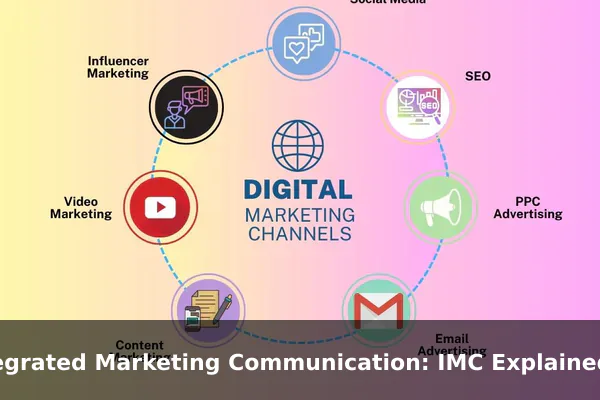
Imagine seeing a brand’s ad on Instagram that says “We make things simple,” then visiting their website and finding a completely different slogan. Or receiving an email that uses a formal, corporate tone right after watching a playful YouTube ad from the same company. Mixed messages like these create confusion — and confused customers rarely convert.
Integrated Marketing Communication, commonly known as IMC, is the strategy designed to fix exactly that problem. It is the practice of coordinating all your marketing channels so they deliver one consistent, unified message to your audience. Whether someone discovers your brand through a Google ad, a social media post, or a printed flyer at an event, the message they receive should feel coherent and intentional. This guide explains IMC in plain English and shows you a practical way to apply it.
What Integrated Marketing Communication Really Means
IMC is about making sure every piece of marketing you produce — a tweet, a billboard, an email, a sales call script, or a product page — tells the same core story. The channels can differ, but the brand voice, key message, and overall impression should stay consistent throughout.
At its core, IMC combines several disciplines into one coordinated effort:
- Advertising — paid media across digital and traditional channels
- Public relations — earned media and reputation management
- Direct marketing — email, SMS, and direct mail
- Sales promotions — deals, events, and incentive programs
- Digital content — social media, blogs, video, and search
All of these work toward one shared communication goal rather than operating as disconnected silos within a business.
Why the Word “Integrated” Changes Everything
Many businesses already use multiple marketing channels — that part is not new. What sets IMC apart is the deliberate alignment of teams, messages, and timing so that every channel reinforces the others. Without integration, a business might have a social media team pushing one angle, an email team running a different promotion, and a sales team using a completely separate pitch. IMC eliminates that fragmentation.
Why IMC Matters for Modern Marketing
Research consistently shows that customers interact with a brand across five to seven touchpoints before making a purchase decision. A potential buyer might see a Facebook ad on Monday, read a blog post on Wednesday, watch a product demo on Friday, and check a review site before finally buying the following week. Each of those touchpoints is an opportunity to either build trust or create confusion.
When every touchpoint delivers a different message or feel, trust erodes. When every touchpoint reinforces the same core idea, brand recognition and confidence grow naturally over time.
Key Benefits of a Strong IMC Approach
- Stronger brand recall — Repeated, consistent messaging across channels makes a brand easier to remember.
- Higher conversion rates — Consistent messaging removes friction in the buyer journey by setting clear expectations at every step.
- Better budget efficiency — Coordinated campaigns eliminate wasted spend on conflicting or redundant messages.
- Improved customer trust — Consistency signals reliability and professionalism to potential buyers.
- Clearer measurement — Unified campaigns are far easier to track and optimize than disconnected ones.
The Core Elements of an IMC Strategy
A functional IMC strategy is built on several interconnected parts. Getting these right is what separates a truly integrated campaign from one that simply uses many channels without coordination.
Audience Clarity
Every effective IMC plan starts with a precise understanding of the target audience — their needs, the language they respond to, where they spend time, and what problems they are trying to solve. A message crafted for a specific person is always more powerful than a message aimed at everyone.
One Core Message
Define the single idea you want your audience to take away from the entire campaign. This is your anchor. Every piece of content, every ad, every email, and every sales conversation should connect back to this central message.
Consistent Brand Voice
Your tone, style, and personality must remain recognizable across all channels. Whether you are posting a quick social update or sending a detailed product guide, a reader should be able to identify your brand from the writing alone.
Purposeful Channel Selection
Choose channels based on where your specific audience actually is, not based on what is currently trending in the industry. Each selected channel should have a clear role in the customer journey rather than existing just to increase your presence.
Timing and Sequencing
Plan when and where messages appear so they work together progressively. A social ad might spark initial curiosity; a retargeted email follows up with more detail; a landing page closes the decision. The sequence matters as much as the message itself.
Examples of IMC Across Different Channels
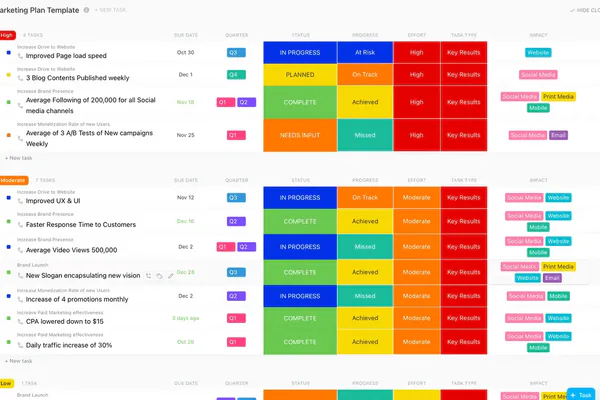
Consider a fitness brand launching a new protein supplement. Here is how a well-executed IMC strategy would look across channels:
- Social media: Short video ads featuring athletes with the tagline “Fuel Your Best,” consistent visual design and color palette throughout.
- Email campaign: A welcome and launch series for existing subscribers using the same tagline, offering an early-access discount.
- Paid search: Google ads targeting “best protein supplement” that lead to a landing page matching the same visual theme and tagline exactly.
- Influencer content: Partner creators receive product briefings aligned with the core message, incorporating it naturally into their own content style.
- Retail packaging: The product box carries the same tagline and visual identity seen across digital channels.
- Customer service: Support agents are briefed on brand tone and the campaign message so interactions feel consistent with everything else.
Every touchpoint tells the same story. Customers recognize the brand no matter where they encounter it, and that recognition builds purchasing confidence.
How to Build an IMC Plan Step by Step
Building an effective IMC plan does not require a large team or a large budget. It requires clarity and coordination. Follow this practical sequence:
- Set your campaign goal — Define what success looks like. More sales, more sign-ups, broader awareness? Be specific.
- Define your audience — Who are you talking to, what do they care about, and where do they spend time?
- Craft a single core message — What is the one takeaway you want your audience to remember?
- Select your channels — Choose platforms and formats that match where your audience actually is.
- Develop consistent assets — Create visuals, copy, and messaging that share the same theme, tone, and look across all channels.
- Assign clear responsibilities — Identify who owns each channel and ensure everyone is briefed on the core message before launch.
- Set a sequenced timeline — Map out when content goes live so touchpoints build on each other progressively.
- Track and optimize — Monitor performance by channel and overall, then refine based on real data.
Common IMC Mistakes to Avoid
Even experienced marketing teams fall into these traps when attempting to integrate their communications:
- Inconsistent tone across channels — Using formal corporate language in email while being casual and slang-heavy on social media creates brand confusion rather than personality.
- Siloed teams — When marketing, sales, PR, and customer service do not share information, campaigns often contradict each other without anyone noticing.
- Trying to say too many things — Overloading a campaign with multiple competing messages dilutes the impact of each one. One clear message beats five mediocre ones.
- Using channels without a purpose — Being present on every platform simply because it is popular, rather than because your audience is there, wastes resources.
- Skipping the feedback loop — Launching a campaign without tracking results means you cannot learn from it or improve the next one.
IMC vs Multichannel Marketing
These two terms are often used interchangeably, but they describe different approaches. Understanding the distinction helps clarify what IMC actually requires.
| Multichannel Marketing | IMC | |
|---|---|---|
| Channels used | Many | Many |
| Message | Can vary by channel | Unified across all channels |
| Team alignment | Teams may work independently | All teams aligned to one message |
| Customer experience | Fragmented | Seamless and consistent |
| Primary goal | Reach customers where they are | Deliver one cohesive brand story |
Multichannel marketing is about presence across platforms. IMC is about coherence across every interaction a customer has with your brand. You can do multichannel marketing without integration, but you cannot do true IMC without it.
How to Know If Your IMC Is Working
Measuring IMC effectiveness goes beyond individual channel metrics like clicks and open rates. Look at the bigger picture:
- Brand recognition in surveys — Can customers recall your core message when asked about your brand?
- Cross-channel attribution — Are customers engaging with multiple touchpoints before converting, suggesting the journey is working as planned?
- Consistent customer descriptions — Do customers across different acquisition sources describe your brand in similar terms?
- Conversion rate trends — Has overall conversion improved as message consistency has increased?
- Qualitative feedback — Are customers and prospects commenting on a clear, professional, or recognizable brand experience?
When these indicators improve together, your IMC strategy is working. Strong IMC does not just improve individual channel performance — it elevates the entire customer journey.
Integrated Marketing Communication is one of the most practical and accessible frameworks in modern marketing. It does not demand a massive budget or a large team. It demands clarity, alignment, and commitment to a single core message. When every channel you use tells the same story, customers recognize your brand faster, trust it more deeply, and are significantly more likely to act. Start with one clear message, align your channels around it, and build from there.
