
Most marketing decisions used to rely on instinct — a marketer would guess which headline sounded better, pick their favorite button color, and hope for the best. A/B testing changed that. It gave marketers a scientific way to compare two versions of a campaign element and let real audience behavior decide the winner. The result is fewer bad guesses and more campaigns that actually convert.
Even small changes can have a measurable impact. Changing a CTA button from “Submit” to “Get My Free Guide” can double click-through rates. Swapping one email subject line for another can lift open rates by 20 percent. These gains compound over time, which is why split testing has become a core practice in digital marketing. This guide explains how A/B testing works, what to test, and how to avoid the mistakes that ruin results.
What A/B Testing Means in Marketing
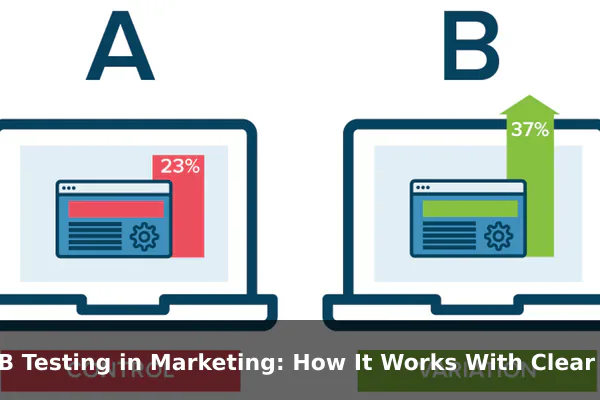
A/B testing — also called split testing — is the practice of showing two versions of a single element to different segments of your audience at the same time, then measuring which version performs better against a defined goal. The original version is called the control (Version A). The modified version is called the variant (Version B). Everything else stays identical. The only thing that changes is the one element you are testing.
Control vs. Variant: Why the Distinction Matters
The control is your baseline — it represents current performance with no changes. The variant introduces one specific change you believe could improve results. By keeping everything else constant, any difference in performance can be attributed to that one change, not to external factors or unrelated edits. This is what separates A/B testing from simply making changes and checking the analytics later. When you change multiple things at once and see a lift in conversions, you have no way of knowing which change caused the improvement.
A/B Testing vs. Guessing
Gut instinct has its place in brainstorming, but it is a poor decision-making tool for optimizing campaigns. A/B testing removes personal bias from the equation. What the marketer prefers and what the audience responds to are often very different things. Data from a properly run test is far more reliable than any internal opinion, and it gives you a defensible reason to implement a change across your full audience.
How the A/B Testing Process Works Step by Step
A/B testing follows a predictable structure. Each step matters — skipping one can undermine the entire test and lead you to draw false conclusions from your data.
- Identify a problem or opportunity. Start with data that reveals a weak point. A high bounce rate on a landing page, a low email open rate, or a poor conversion rate on a product page are all strong candidates for testing.
- Form a hypothesis. State what you believe is causing the problem and what change might fix it. A good hypothesis sounds like: “Changing the CTA from ‘Buy Now’ to ‘Start My Free Trial’ will increase sign-ups because it lowers perceived commitment.”
- Choose one variable to test. Test only one element per experiment. Testing multiple changes at once makes it impossible to isolate the cause of any difference in results.
- Set a measurable goal. Define the metric you will use to decide the winner before the test begins. This could be click-through rate, form completion rate, revenue per visitor, or time on page.
- Split your traffic randomly. Divide your audience into two equal groups. One group sees Version A, the other sees Version B. Randomization ensures the two groups are comparable.
- Run the test long enough. Let the test run until it reaches statistical significance — a threshold confirming the difference in results is real and not due to random chance.
- Analyze results and decide. Compare performance data for both versions. If the variant outperforms the control with sufficient confidence, implement the winning version. If not, return to the drawing board with a new hypothesis.
What You Can Test in Campaigns and Funnels
Almost any element a visitor or subscriber sees can be tested. Marketers who are new to A/B testing often focus on headlines and buttons, but the scope extends to nearly every touchpoint in your funnel.
Email Marketing Elements
- Subject lines — length, tone, personalization, curiosity gaps, and use of numbers
- Preview text — the line shown after the subject in most email clients
- From name — personal name vs. brand name vs. a combined format
- Send time and day of week
- Body copy length — short and direct vs. detailed and informative
- CTA button text, color, and placement
Landing Page Elements
- Headline and subheadline wording
- Hero image or video
- Form length — number of required fields
- Social proof — testimonials, brand logos, review counts
- CTA copy and button design
- Page layout and content order
Paid Ad and Product Page Elements
- Ad headline and description copy
- Creative format — image vs. video vs. carousel
- Offer type — discount vs. free trial vs. bonus content
- Product description format — bullet points vs. paragraphs
- Price display — with or without comparison pricing
Clear A/B Testing Examples for Real Marketing Channels

Abstract concepts become much clearer through concrete examples. The scenarios below reflect the kind of tests marketers run regularly and illustrate how small changes produce measurable differences in performance.
Email Marketing: Subject Line Test
A SaaS company wants to improve the open rate of their weekly newsletter. They run a subject line test on a list of 10,000 subscribers, splitting it evenly into two groups of 5,000.
- Version A (control): “This Week’s Marketing Tips”
- Version B (variant): “3 Changes That Doubled Our Click Rate”
After 48 hours, Version B had an open rate of 34 percent compared to 21 percent for Version A. The specific number and the implied result made Version B more compelling. The company rolls out Version B to the remaining list and adopts a more specific, outcome-focused format for future subject lines.
Landing Page: CTA Button Test
A fitness brand is running paid ads to a landing page offering a free meal plan. Their conversion rate is 4.2 percent and they want to improve it. They test the CTA button copy and color.
- Version A (control): Green button labeled “Download Now”
- Version B (variant): Orange button labeled “Get My Free Meal Plan”
After 1,000 visitors per version, Version B converts at 6.8 percent — a lift of more than 60 percent. The specific and personalized language outperformed the generic version. The brand updates all their landing page CTAs to use first-person, benefit-led language.
Paid Ads: Headline Test
An e-commerce store selling home office furniture runs a Google Search ad campaign. They test two headlines for the same ad group.
- Version A: “Premium Office Chairs – Shop Now”
- Version B: “Back Pain? Try Our Ergonomic Office Chairs”
Version B achieves a click-through rate of 5.1 percent vs. 2.9 percent for Version A. Addressing a specific pain point resonated more than a generic product description. The store updates their ad copy strategy to lead with customer problems rather than product features.
E-commerce: Product Page Test
An online clothing retailer tests whether adding a “Find My Size” link near the Add to Cart button reduces returns and increases purchases.
- Version A: Standard product page with no size guide link
- Version B: Product page with a prominent “Find My Size” link above the CTA
Version B results in a 12 percent increase in completed purchases and a 9 percent reduction in returns. Reducing customer uncertainty at the point of decision improved both conversion and post-purchase satisfaction at the same time.
How to Measure A/B Test Results Correctly
Choosing the right metrics and knowing how to interpret results are just as important as setting up the test. A poorly measured test can point you in the wrong direction even when the data looks clean.
Key Metrics by Channel
- Email tests: open rate, click-through rate, unsubscribe rate
- Landing page tests: conversion rate, bounce rate, form completion rate
- Ad tests: CTR, cost per click, cost per acquisition, return on ad spend
- Product page tests: add-to-cart rate, purchase completion rate, revenue per visitor
Statistical Significance and Sample Size
Statistical significance tells you whether the difference between Version A and Version B is real or likely due to random variation. Most marketers use a 95 percent confidence level as their threshold — meaning there is only a 5 percent chance the observed difference happened by chance. If you stop a test early because one version looks like it is winning, you risk making a decision based on noise rather than signal.
Small sample sizes produce unreliable results. A test with 100 visitors per version may show a 30 percent difference that completely disappears once 1,000 visitors are included. Use a sample size calculator before you launch a test to determine the minimum number of visitors or emails needed for valid results.
Common A/B Testing Mistakes That Distort Results
Even marketers who understand the concept regularly make errors that compromise their data. Recognizing these mistakes before they happen will save you time and prevent you from optimizing in the wrong direction.
Testing Too Many Variables at Once
Changing the headline, image, and CTA in a single test creates a situation where you cannot tell which change drove the result. Run one change per test. If you need to test multiple combinations, use a proper multivariate testing tool with sufficient traffic to support it.
Stopping the Test Too Early
A version that is winning after two days may not be winning after two weeks. Campaigns are affected by day-of-week behavior, seasonal patterns, and audience composition changes. Let the test reach statistical significance before declaring a winner, even if the early data looks convincing.
Using the Wrong Success Metric
Optimizing for clicks when your real goal is revenue can lead you in the wrong direction. A version that gets more clicks but attracts lower-quality leads can hurt overall performance even though it looks like a winner on the surface. Always tie your test metric directly to a business outcome that matters.
Ignoring Audience Segmentation
A change that lifts conversion for first-time visitors might hurt conversion for returning customers. If your audience is large enough, analyze test results by segment to see whether the winning version works across all groups or only for specific ones. Segment-level insights often reveal optimization opportunities that aggregate data hides.
Simple Best Practices to Get Better Wins Over Time
A/B testing is most valuable when it becomes a continuous habit rather than a one-off experiment. The following practices help teams build a reliable optimization process that compounds results over months and quarters.
Write Better Hypotheses
A good hypothesis is specific and grounded in data or observation. Instead of “I think a red button will work better,” write: “Based on our heatmap data showing visitors are not noticing the current CTA, a higher-contrast red button will increase clicks by making the action more visible.” This forces you to connect your tests to actual evidence rather than preference.
Document Every Test
Keep a running record of every test you run, including the hypothesis, the metric, the results, and whether the change was implemented. This log prevents teams from repeating tests that have already been answered and helps new team members learn from past experiments without starting from scratch.
Build on Winners
When a variant wins, use it as the new control and continue testing. Marginal gains accumulate. A series of improvements that each lift conversion by 10 percent will compound into substantial results over a quarter or a year. Treat each winning test as the new starting point, not the finish line.
Share Results Across Teams
A/B test insights from email campaigns can inform landing page decisions. Ad copy findings can improve product description writing. When testing results are shared across marketing, product, and content teams, the organization learns faster and avoids siloed optimization where each team repeats mistakes the others have already solved.
Conclusion
A/B testing is one of the most practical tools in a marketer’s kit. It replaces opinion with evidence, turns small insights into meaningful wins, and builds an ongoing feedback loop between your campaigns and your audience’s behavior. The process is straightforward: form a hypothesis, test one change, measure the right metric, and let the data guide your next move.
Whether you are refining email subject lines, optimizing landing page CTAs, or improving ad headlines, the discipline of split testing helps you make improvements you can actually justify with numbers. Start with one test, document what you learn, and build the habit. Over time, consistent A/B testing becomes one of the most reliable ways to grow conversion rates without simply increasing your ad spend.
