
Sales funnels are one of the most talked-about frameworks in modern business, yet many people are not exactly sure what they mean or how they work in practice. Whether you run an online store, a service business, or a software product, understanding the sales funnel can change how you attract customers and close more deals.
At its core, a sales funnel describes the path a potential customer takes from first learning about your business to eventually making a purchase. It is called a funnel because a large number of people enter at the top, and a smaller, more qualified group makes it all the way through to becoming paying customers. This guide breaks down every stage of the funnel with plain language, real examples, and practical tips you can apply right away.
What a Sales Funnel Really Means
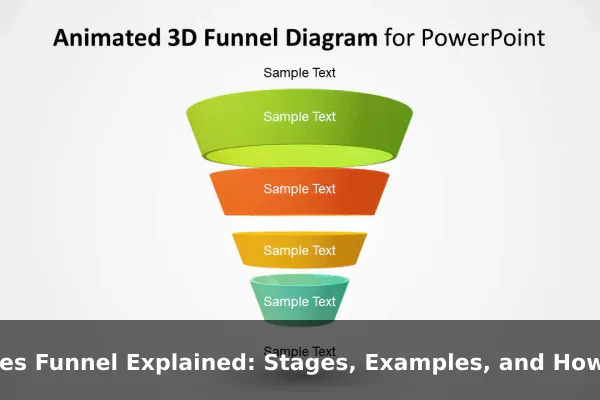
A sales funnel is a visual model that maps the buyer’s journey from first discovery to completed purchase. The word funnel reflects the shape of that journey: wide at the top where many potential buyers enter, and narrow at the bottom where only those who are ready to buy make it through.
This narrowing is not a failure. It is a realistic picture of how people make decisions. Not everyone who hears about your product will buy, and understanding that reality helps you focus your energy where it matters most. The funnel gives you a structured way to see where your customers are in the decision process and what they need at each step to keep moving forward.
Why Sales Funnels Matter for Businesses
Many businesses lose customers not because their product is poor, but because they are not paying attention to where or why people leave the buying process. The sales funnel solves that by giving you a clear framework to examine every stage of customer acquisition.
- Better targeting: You can tailor messages to match where a prospect is in the journey, making communication more relevant and effective.
- Improved conversion rates: Spotting weak points in the funnel lets you make changes that move more people forward toward a purchase.
- Aligned teams: Marketing and sales teams share a common language and structure, which makes working together much easier.
- Predictable revenue: When you understand your funnel metrics, you can estimate how many leads you need to hit a specific sales target.
Businesses that actively manage their sales funnel tend to convert more leads and use their marketing budget more efficiently than those that do not have a clear process in place.
The Main Stages of a Sales Funnel
Most sales funnels share the same five core phases. The names may vary from business to business, but the underlying logic stays the same.
Awareness
This is the top of the funnel. A potential customer learns your business exists through a Google search, a social media post, a paid advertisement, or a recommendation from a friend. At this stage they may have no purchase intent at all. Your goal here is simply to get noticed by the right people.
Interest
The prospect is curious and wants to know more. They might browse your website, read a blog post, or follow you on social media. They are not ready to buy yet, but they are paying attention and gathering information.
Consideration
Now the prospect is actively evaluating whether your product or service is the right fit for them. They might compare you to competitors, read customer reviews, watch demo videos, or sign up for a free trial. Trust becomes critical at this stage.
Decision
The buyer is close to making a choice. A compelling offer, a clear call to action, or a limited-time deal can be the final push they need. This is where the sale is won or lost, and even small friction points can cost you the conversion.
Action
The prospect becomes a paying customer. They complete the checkout, sign a contract, or submit a payment. The funnel has done its job, though your relationship with this customer does not have to stop here. Retention and repeat purchases are natural extensions of a well-managed funnel.
How a Sales Funnel Works Step by Step
Seeing the funnel in motion makes it much easier to understand. Here is a simple walkthrough using a real-world scenario.
Imagine someone searching for best productivity apps on Google. They click your blog post and read it — that is the Awareness stage. They like what they see and subscribe to your newsletter — Interest. Over the following days they receive emails with feature comparisons and user stories — Consideration. Then they receive a message with a limited discount and visit your pricing page — Decision. Finally they click Buy Now and complete the purchase — Action.
Each step required a specific type of content or interaction. If any step had a friction point — a confusing pricing page, no clear next step, or an unanswered question — the customer could have dropped off before converting. That is why mapping the funnel is so valuable.
Simple Sales Funnel Examples
Looking at how different types of businesses use the funnel helps bring the concept to life.
E-Commerce Store
An online clothing brand runs Instagram ads targeting fashion-conscious buyers. Visitors land on a product page and browse items. They read reviews and check sizing guides. A pop-up offers ten percent off for first-time buyers. They add to cart and complete the checkout. Every element, from the ad creative to the pop-up timing, is part of a deliberate funnel strategy.
Service Business
A prospect finds a marketing agency through a Google search for SEO help for small business. They visit the website and read case studies. They request a free consultation. The agency sends a custom proposal with clear pricing and expected outcomes. The prospect signs the contract and becomes a client. The middle stages here depend heavily on trust-building through social proof and personal communication.
SaaS Product
A startup discovers a project management tool through a LinkedIn post. They click through and start a free trial without needing a credit card. The tool sends onboarding emails and highlights premium features with a prompt to upgrade. After seeing the value firsthand, the team subscribes to a paid plan. Free trials are one of the most effective middle-funnel tools in the SaaS space because they let the product speak for itself.
Common Reasons Prospects Drop Out
Understanding why people leave your funnel is just as important as knowing how the funnel works. The most common drop-off reasons include the following.
- Weak top-of-funnel targeting: Reaching people who were never likely to buy wastes your budget and distorts your data.
- Unclear value proposition: If visitors cannot quickly understand what you offer and why it matters to them, they will leave within seconds.
- No follow-up sequence: Many buyers need several touchpoints before they are ready to commit. Silence between stages means lost sales.
- Long or confusing checkout process: Every extra step or unnecessary form field increases the chance someone abandons before finishing.
- Missing trust signals: No reviews, no guarantee, or no visible security badge can make buyers hesitate right before they convert.
How to Improve Each Funnel Stage
Once you understand where people are dropping off, you can make targeted improvements that move more prospects through the funnel.
Top of Funnel
Focus on reaching the right audience through SEO, paid advertising, social media, and content marketing. Relevance matters more than volume. One thousand targeted visitors will always outperform ten thousand unqualified ones.
Middle of Funnel
Use email sequences, retargeting campaigns, case studies, and product demos to build trust and educate your prospects. Answer the questions buyers are actually asking at this stage, and make it easy for them to compare their options with confidence.
Bottom of Funnel
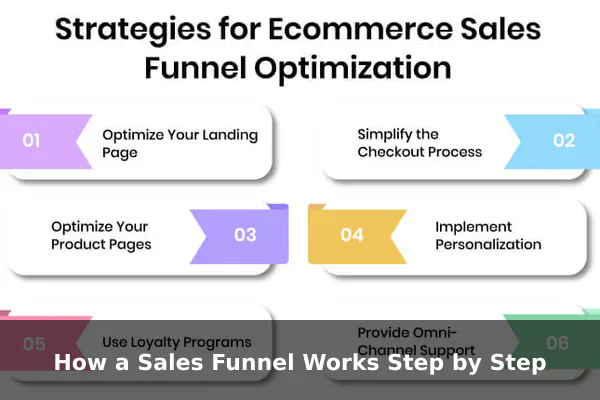
Make your offer crystal clear and reduce every possible point of friction. Simplify the checkout or sign-up process. Add customer testimonials, money-back guarantees, and clear support options to remove the last hesitations before the purchase.
Sales Funnel vs Marketing Funnel
These two terms are often used interchangeably, but they do carry a meaningful distinction in most organizations.
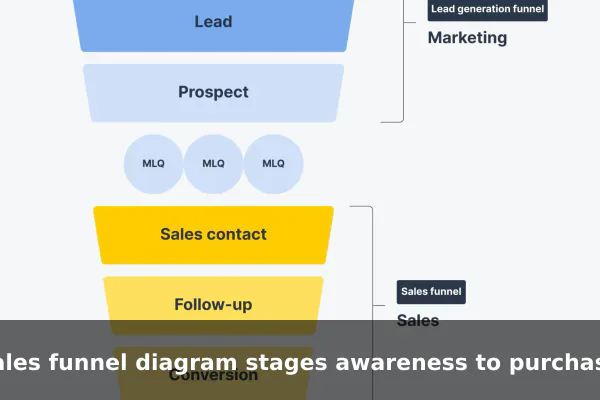
- The marketing funnel focuses on generating awareness and nurturing leads until they signal readiness to speak with someone about buying. It covers the early and middle stages of the buyer journey.
- The sales funnel picks up where the marketing funnel hands off. It focuses on converting interested, qualified prospects into paying customers through direct outreach, proposals, demos, and closing conversations.
In smaller businesses one person or team often manages both. In larger companies the marketing team generates and nurtures leads, then hands qualified prospects to a sales team that owns everything from consideration to close. Knowing which stage belongs to which team helps prevent leads from falling through the cracks.
Key Metrics to Track
To know whether your funnel is performing well, you need to measure the right numbers consistently.
- Website traffic: The total number of people entering the top of your funnel from all sources.
- Lead conversion rate: The percentage of visitors who become leads by signing up, filling out a form, or starting a trial.
- Click-through rate: How many people click from an ad, email, or landing page to your core offer.
- Cost per lead: How much you spend on average to acquire each new lead, helping you evaluate channel efficiency.
- Final conversion rate: The percentage of leads that become paying customers, which is the ultimate measure of funnel health.
- Average order value: How much each customer spends per transaction, which directly affects your overall revenue from the same funnel volume.
When to Build or Refine Your Funnel
If you are just starting out, build a simple funnel first. Even a basic setup with a landing page, a short email sequence, and a clear offer can dramatically improve results compared to having no structured process at all. Start simple, get real data, then improve from there.
If you already have a funnel in place, let your metrics tell you where to focus. High traffic but low leads points to a top-of-funnel messaging problem. High leads but low conversions points to a trust or offer issue at the bottom. Use data rather than guesswork to decide where to invest your time and budget.
The sales funnel is not something you build once and forget. It needs regular review and testing as your audience, offers, and market evolve. Businesses that treat their funnel as a living system consistently outperform those that set it and move on. Understanding the funnel is the first step, but the real advantage comes from making it better every month.
