
Every marketing team knows the cost of attracting a new customer. Campaigns, ads, sales outreach, and onboarding all add up — and after all that investment, the real test begins: will that customer come back? Customer retention is the measure of how well a business keeps the customers it already has, and it is one of the most underestimated levers in sustainable growth.
Studies consistently show that acquiring a new customer costs five to seven times more than retaining an existing one. Yet most marketing budgets still lean heavily toward acquisition. Shifting even a portion of that focus toward retention can dramatically improve profitability, referral rates, and long-term brand strength. This article explains what customer retention really means, why it matters more than many teams realize, and how to build practical systems to improve it.
What Customer Retention Means in Practice
Customer retention refers to a business’s ability to keep its existing customers purchasing, using its service, or staying subscribed over a defined period. It is distinct from acquisition — which focuses on bringing new customers in — and from loyalty programs, which are just one tool within a broader retention strategy.
A retained customer is not simply someone who hasn’t canceled yet. True retention means a customer continues to see value in your product or service and actively chooses to return. That distinction matters because it shifts retention from a defensive tactic to an active, value-driven discipline.
Retention vs. Loyalty: What’s the Difference?
Loyalty is an emotional connection — a preference for your brand over alternatives. Retention is behavioral — a customer actually coming back. You can have retention without deep loyalty (a customer staying out of convenience or switching costs) and loyalty without retention (someone who loves your brand but hasn’t purchased recently). The goal of a strong retention strategy is to build both.
Why Retention Has a Bigger Impact Than Many Teams Expect
The business case for customer retention is compelling. Here is why it consistently outperforms acquisition-only thinking:
- Higher lifetime value: Customers who stay longer spend more over time. Even a 5% increase in retention rate can increase profits by 25% to 95%, depending on the industry.
- Lower marketing costs: Retained customers require less persuasion. They already trust your brand, so converting them again costs a fraction of what a new acquisition costs.
- Organic referrals: Loyal, retained customers are far more likely to recommend your business to others, creating low-cost acquisition as a side effect of good retention.
- Revenue stability: A customer base with high retention is more predictable, making revenue forecasting, inventory planning, and team scaling more manageable.
- Better feedback quality: Long-term customers give more actionable feedback because they understand your product deeply — helping you improve faster.
For subscription businesses, SaaS companies, and ecommerce brands, even a single percentage point improvement in retention can be worth hundreds of thousands of dollars in annual recurring revenue.
The Main Reasons Customers Stop Coming Back
Understanding churn starts with understanding its causes. Most businesses lose customers not because of price, but because of experience gaps. Common reasons include:
Poor Onboarding
A customer who doesn’t quickly see value after their first purchase or sign-up is unlikely to return. If the early experience is confusing, slow, or underwhelming, they leave before loyalty can form.
Inconsistent Product or Service Quality
Customers expect consistency. If your product delivers sometimes but not others, trust erodes. Even a few bad experiences can outweigh many good ones in a customer’s memory.
Weak or Irrelevant Communication
Generic, irrelevant, or too-frequent messaging pushes customers away. If your emails don’t feel personal or useful, they get ignored — and eventually, so does your brand.
Slow or Unhelpful Support
A customer who runs into a problem and gets poor support will almost always churn. Support quality is one of the strongest predictors of retention because it signals how much a company values its customers after the sale.
No Clear Reason to Return
Some businesses fail at retention simply because they never actively give customers a reason to come back. No follow-up, no new value communicated — customers drift away because they forgot or found something else.
How to Improve Customer Retention Step by Step
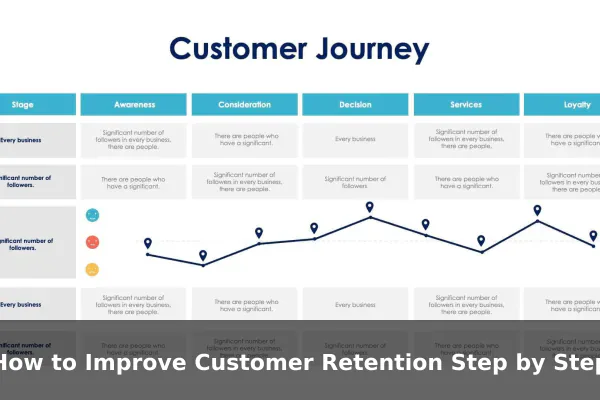
Improving retention is not about a single tactic — it is a system of ongoing actions that reinforce value at each stage of the customer relationship.
1. Fix Your Onboarding
The first 30 days are critical. Design a clear onboarding sequence that shows customers exactly how to get value quickly. Use welcome emails, tutorials, check-ins, or guided setup flows depending on your product type.
2. Personalize Communication
Segment your customer base and tailor messages based on purchase history, behavior, or preferences. A customer who bought running shoes does not need the same email as someone who bought hiking gear. Relevance drives engagement and return visits.
3. Create a Loyalty or Rewards Program
Incentivize repeat purchases with points, discounts, early access, or exclusive perks. The goal isn’t to buy loyalty — it’s to reward behavior you want more of and give customers a reason to prefer you over alternatives.
4. Close the Feedback Loop
Survey customers regularly. More importantly, act on what they tell you and let them know you did. When customers see that their feedback leads to real change, their trust and commitment deepens significantly.
5. Provide Proactive Support
Don’t wait for complaints — anticipate friction points and reach out before problems escalate. Proactive support signals that you care, and it prevents the silent churn that happens when frustrated customers simply leave without saying why.
6. Re-engage Lapsing Customers
Identify customers who haven’t purchased or logged in recently and run targeted win-back campaigns. A timely, relevant message with a strong offer can recover a significant portion of customers who were drifting toward churn.
Metrics That Show Whether Retention Is Improving
You cannot manage what you do not measure. These are the core metrics every retention-focused marketing team should track:
- Customer Retention Rate (CRR): The percentage of customers retained over a given period. Formula: ((Customers at end – New customers acquired) / Customers at start) × 100.
- Churn Rate: The percentage of customers lost in a period. This is the inverse of the retention rate and should trend downward over time.
- Repeat Purchase Rate: For ecommerce, the share of customers who make more than one purchase — a strong signal of retention health.
- Customer Lifetime Value (CLV): The total revenue expected from a single customer over their entire relationship with your business. Higher CLV means better retention outcomes.
- Net Promoter Score (NPS): Measures how likely customers are to recommend you. A strong NPS correlates directly with long-term retention and referral growth.
Review these metrics monthly and tie them to specific retention initiatives so you can clearly see what is working and where to invest next.
Common Retention Mistakes to Avoid
Even well-intentioned retention efforts can backfire. Watch out for these common missteps:
- Over-discounting: Training customers to only buy when there’s a sale erodes margin and devalues your brand. Reserve discounts for genuine win-back scenarios, not routine retention.
- Generic email blasts: Sending the same message to every customer is a missed opportunity. Generic communication feels impersonal and drives unsubscribes.
- Ignoring complaints: Negative reviews and support tickets are retention opportunities in disguise. Addressing them well can convert a frustrated customer into a loyal advocate.
- Measuring retention too broadly: Tracking the overall rate is useful, but breaking it down by segment, product line, or acquisition channel reveals where retention is actually breaking down.
- Reacting instead of predicting: Most businesses react to churn instead of anticipating it. Using behavioral signals — declining login frequency, reduced spending — to intervene early is far more effective.
Building a Retention-Focused Marketing Strategy
Making retention a core part of your marketing strategy requires shifting how you define success. Here is a simple framework to get started:
- Audit your current state: Calculate your retention rate, churn rate, and CLV. Understand where customers are dropping off in the lifecycle.
- Identify your biggest drop-off point: Use data to find the stage where the most customers leave — whether that’s post-purchase, post-trial, or after a specific interaction.
- Build one targeted initiative: Don’t try to fix everything at once. A focused improvement in the highest-impact area delivers faster, clearer results.
- Set retention KPIs: Tie marketing team goals to retention metrics alongside acquisition metrics, so retention gets equal attention in planning cycles.
- Test, measure, and iterate: Retention improvement is ongoing. Build regular review cycles into your marketing calendar to assess what’s working and where to invest next.
The businesses that lead in their markets over time are rarely those with the biggest acquisition budgets — they are the ones who build systems that keep customers coming back. Retention is not a department or a one-off campaign; it is a business philosophy that shows up in every touchpoint a customer experiences.
Conclusion
Customer retention is one of the highest-leverage activities available to any marketing team. It improves revenue predictability, reduces the pressure on acquisition spending, raises customer lifetime value, and builds the kind of brand trust that generates organic referrals. Understanding why customers leave, creating systems to keep them engaged, and tracking the right metrics are the foundations of a retention strategy that works long-term.
Start with honest measurement of your current retention rate, find the biggest gap in your customer lifecycle, and fix that first. Small, consistent improvements in retention compound into significant competitive advantages over time.
