
SWOT analysis is one of the simplest tools in marketing, but it is often used too loosely to be useful. When done well, it helps a business look at its current position with more discipline. Instead of jumping straight into campaign ideas, marketers can step back and ask four practical questions: What are we good at? Where are we weak? What openings can we use? What risks could slow us down?
In a marketing context, that matters because strategy is rarely improved by guesswork alone. A company may have a strong brand but poor conversion pages. It may have a loyal customer base but face new competitors with lower prices. It may see rising demand in a niche market, yet lack the content, budget, or internal processes to capture it. A SWOT analysis organizes those realities so decisions become more grounded.
This guide explains how SWOT analysis in marketing works, what each part means, how to complete one step by step, and how to turn the results into a real action plan. You will also see a simple small-business example, common mistakes to avoid, and a reusable template you can adapt for campaigns, brand planning, product launches, or channel strategy.
What SWOT Analysis Means in Marketing
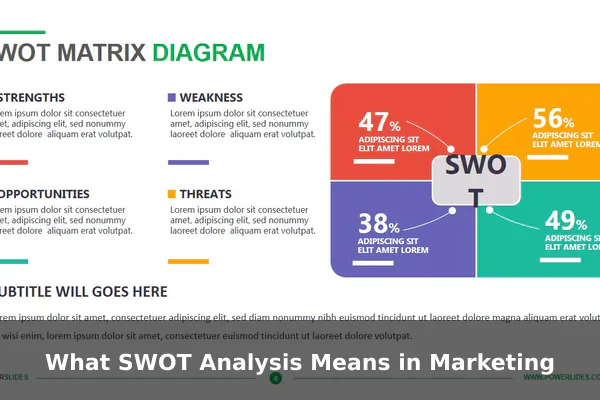
SWOT stands for Strengths, Weaknesses, Opportunities, and Threats. In marketing, it is a framework used to evaluate a brand, product, campaign, or marketing function from both an internal and external perspective.
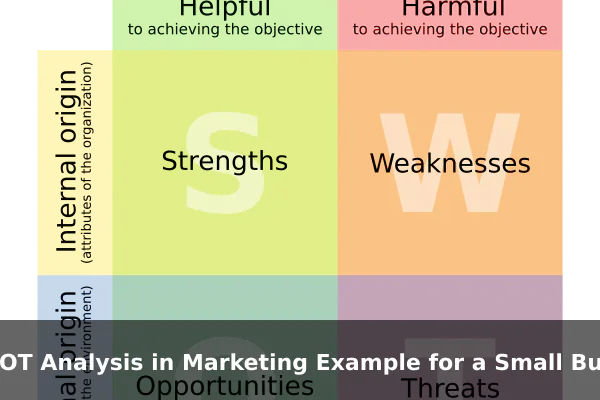
The first two elements, strengths and weaknesses, focus on internal factors. These are things the business controls or strongly influences, such as brand recognition, team skills, budget, content quality, customer data, or website performance.
The second two elements, opportunities and threats, focus on external factors. These come from the market environment, including customer behavior shifts, competitor moves, platform changes, seasonal demand, new technology, regulation, or economic pressure.
Strengths in a marketing SWOT
Strengths are assets that give your marketing an advantage. They help you compete more effectively, communicate value more clearly, or execute campaigns with less friction.
- Strong organic traffic from high-intent search terms
- A trusted brand with strong reviews and referrals
- An engaged email list with healthy open rates
- A clear product benefit that is easy to explain
- An in-house content team that produces quickly
A strength is only useful if it connects to performance. Saying a brand is “creative” is vague. Saying the brand has a video team that can launch campaign assets in three days is specific and actionable.
Weaknesses in a marketing SWOT
Weaknesses are internal limits that reduce marketing effectiveness. They do not mean the business is failing. They simply show where performance is being held back.
- Low brand awareness in a new market
- Poor landing page conversion rates
- Limited paid media budget
- Weak CRM segmentation
- Inconsistent messaging across channels
Good marketers identify weaknesses honestly because hidden weaknesses usually become expensive later. If attribution is unclear, if creative production is slow, or if retention emails are underperforming, those issues belong in the analysis.
Opportunities in a marketing SWOT
Opportunities are favorable external conditions that the business may be able to use for growth. They are not guaranteed wins. They are chances the market is offering.
- A competitor exits the market
- Search demand rises for a related product category
- A new social platform fits the target audience well
- Customers show demand for subscription or bundle offers
- Partnerships become available with complementary brands
Opportunities matter because they help marketers prioritize where effort could produce outsized returns. Without this view, teams often spread resources across too many ideas at once.
Threats in a marketing SWOT
Threats are outside forces that could reduce growth, increase acquisition costs, or weaken market position.
- A large competitor starts bidding aggressively on branded keywords
- Platform algorithm changes reduce reach
- Customer sentiment shifts toward lower-cost alternatives
- Ad costs rise in a crowded category
- New privacy rules make targeting harder
Threats do not always require dramatic reactions. Sometimes they simply call for better messaging, tighter budget control, or channel diversification.
The value of SWOT analysis in marketing is not the list itself. The value comes from seeing how the four areas interact. A strength can help capture an opportunity. A weakness can make a threat more dangerous. That is where better strategy begins.
Why Marketers Use SWOT Before Planning Campaigns
Many marketing problems are really planning problems. Teams rush into writing copy, launching ads, or redesigning pages before they have a shared view of the business situation. SWOT helps create that shared view.
It sharpens positioning
Positioning improves when marketers know which strengths truly matter to buyers. If your brand has expert support, fast delivery, or unusual product quality, those strengths can become the center of your message. A SWOT analysis helps separate meaningful differentiators from generic claims.
It also shows when positioning needs adjustment. For example, if low awareness is a weakness and larger competitors dominate price comparisons, the better strategy may be to position around niche expertise rather than broad category leadership.
It improves audience and channel decisions
Not every channel fits every business at every stage. A SWOT analysis can reveal whether the company has the content capacity, budget, data, and brand credibility needed to succeed in specific channels.
For example:
- If a brand’s strength is educational content, SEO and email may outperform aggressive paid social.
- If the weakness is limited design resources, a high-volume creative testing plan may be unrealistic.
- If an opportunity appears in local search demand, local SEO and map visibility may deserve more budget.
It helps allocate budget more rationally
SWOT is useful before budgeting because it highlights where marketing investment is likely to produce the best return. A business with high repeat purchase rates may benefit more from retention campaigns than from expensive cold acquisition. A business with strong product-market fit but weak visibility may need awareness spend first.
In other words, SWOT helps answer a practical question: What should we fund now, and why?
It prepares teams for competitive response
Marketing plans often fail because they assume competitors will remain static. SWOT forces teams to consider competitor pressure as an active part of planning. If rivals can copy offers quickly, if they have larger ad budgets, or if they already dominate comparison searches, the business needs a smarter route to market.
This makes SWOT especially helpful for:
- New product launches
- Quarterly campaign planning
- Rebranding or repositioning work
- Entering a new market segment
- Recovering from declining lead quality or rising CAC
Used early enough, SWOT helps marketers avoid strategies that look good in slides but collapse under real market conditions.
How to Do a SWOT Analysis Step by Step
A useful SWOT analysis is built from evidence, not opinion. The process does not need to be complex, but it should be structured enough that the outcome can guide real decisions.
1. Define the marketing goal or scope
Start by deciding what the analysis is for. A SWOT for an entire brand will look different from a SWOT for a product launch or a single campaign. Narrow scope creates better insight.
Examples of scope:
- Improving lead generation for a service business
- Planning a six-month content strategy
- Launching an online subscription offer
- Entering a new geographic market
2. Gather marketing evidence
Before filling the four boxes, collect the facts that matter most. Common sources include website analytics, CRM data, ad platform reports, customer surveys, sales feedback, review analysis, competitor observations, and search trend data.
Useful questions include:
- Which channels drive the best leads or sales?
- Where are drop-offs happening in the funnel?
- What do customers praise most often?
- What objections appear in sales calls or reviews?
- Where are competitors gaining attention?
This evidence step keeps the SWOT grounded. It is the difference between “our social media is weak” and “our social media reach is flat, posting is inconsistent, and referral traffic is under 2% of total sessions.”
3. List strengths and weaknesses
Next, identify internal realities. Focus on factors that affect marketing execution, customer perception, or commercial performance. Aim for specificity rather than volume.
Helpful areas to assess:
- Brand recognition
- Messaging clarity
- Customer loyalty
- Website usability
- Content production ability
- Data quality and tracking
- Budget flexibility
- Team expertise
4. Identify opportunities and threats
Then scan the outside environment. Look for changes in customer demand, channel behavior, market structure, technology, pricing pressure, and competitor activity.
Questions to ask:
- Is there a growing segment we are not serving well yet?
- Are search trends changing in our favor?
- Are customers asking for a new offer type?
- Have competitors become weaker or more aggressive?
- Are external costs rising in a way that changes our channel mix?
5. Prioritize the most important findings
A long SWOT list can feel thorough, but it often becomes unusable. The better approach is to rank each item by business impact and urgency. Most teams should narrow to the top three to five items in each category.
One simple method is to score each factor on:
- Impact on revenue or growth
- Likelihood or persistence
- Ability to act on it within the planning period
This step turns a brainstorming exercise into a planning tool.
6. Connect the findings to decisions
Finally, use the SWOT to guide choices. Decide which strengths to emphasize, which weaknesses to fix first, which opportunities deserve investment, and which threats require mitigation.
At this stage, the analysis should begin answering practical marketing questions such as:
- What message should lead the campaign?
- Which audience segment should we target first?
- Which channel deserves more budget?
- What weakness must be fixed before scaling?
- What external risk should shape our timeline or offer?
If the SWOT does not influence these decisions, it is incomplete.
SWOT Analysis in Marketing Example for a Small Business
Consider a small business called North Street Roasters, an independent coffee shop that also sells beans online. The owner wants to grow online orders and launch a monthly coffee subscription without wasting budget.
Business snapshot
The shop already has a loyal local customer base, strong product quality, and positive reviews. However, online sales are inconsistent, the website is basic, and larger coffee brands dominate paid ads and national search results.
Sample marketing SWOT analysis
Strengths
- Excellent customer reviews that highlight quality and freshness
- Strong local brand reputation and repeat buyers
- Unique seasonal roasts that create storytelling opportunities
- Owner has direct expertise and a clear brand voice
Weaknesses
- Low national brand awareness
- Limited ecommerce conversion optimization
- Small paid advertising budget
- Email list exists but is rarely segmented or used consistently
Opportunities
- Growing interest in specialty coffee subscriptions
- Search demand for fresh-roasted beans and gift boxes
- Potential partnerships with local food creators and lifestyle influencers
- Holiday and seasonal gift campaigns
Threats
- Larger coffee brands can outspend on paid search and social ads
- Price-sensitive buyers may switch to cheaper alternatives
- Shipping costs can reduce online purchase appeal
- Competitors may copy subscription offers quickly
What the marketing team should do next
This is where the SWOT becomes useful. Instead of trying to compete everywhere, the business can build a focused action plan around the strongest combinations.
- Use strengths to capture opportunities: Turn strong reviews and product stories into subscription landing pages, email flows, and short-form video content.
- Reduce weaknesses before scaling: Improve the ecommerce page structure, simplify checkout, and build segmented email campaigns for first-time buyers, repeat buyers, and gift shoppers.
- Defend against threats: Avoid competing on price with bigger brands and position around freshness, craft, and limited seasonal releases instead.
From this SWOT, North Street Roasters might choose a practical three-part strategy:
- Launch a subscription page centered on freshness, tasting notes, and flexible delivery.
- Create email campaigns featuring seasonal products and subscription incentives for existing customers.
- Run small, targeted campaigns around niche search intent and local creator partnerships instead of broad national paid ads.
That is a good example of SWOT analysis in marketing because each insight leads to a specific decision. The framework is not just describing the business. It is shaping the route to growth.
How to Turn a SWOT Into a Marketing Action Plan
One of the most common problems with SWOT analysis is stopping after the grid is complete. A finished matrix is not the end product. The real output should be a prioritized marketing action plan.
Match the quadrants strategically
A useful way to move from analysis to action is to pair the quadrants.
- Strengths + Opportunities: Where can current advantages help you grow fastest?
- Weaknesses + Opportunities: Which internal gaps must be fixed to benefit from the market opening?
- Strengths + Threats: Which advantages help protect your position?
- Weaknesses + Threats: Which combinations create the biggest risk?
This pairing process quickly reveals priorities. For example, if your strength is strong educational content and the opportunity is rising search demand, SEO content expansion may be a top move. If your weakness is poor tracking and the threat is rising ad costs, measurement fixes may need to happen before increasing spend.
Translate findings into goals
Every major SWOT insight should connect to a measurable objective. That prevents vague planning and makes execution easier to manage.
Examples:
- Improve landing page conversion rate from 1.8% to 2.7% in the next quarter
- Grow email-attributed revenue by 20% through segmentation and automation
- Increase organic traffic to subscription-related pages by 30% in six months
- Reduce dependence on one paid channel by building two additional acquisition sources
Build messaging from real strengths
Marketing messages often become generic because they are not anchored in business reality. SWOT helps avoid that. If the analysis shows your biggest strengths are expert service, faster turnaround, or superior customization, your copy should reflect those advantages directly.
This also improves consistency across channels. The same core strengths can shape:
- Homepage messaging
- Paid ad headlines
- Email nurture sequences
- Sales enablement materials
- Social proof and case studies
Choose KPIs that reflect the strategy
The right KPIs depend on the SWOT-driven plan. A business solving for low awareness should not judge success only by immediate purchases. A business addressing retention weakness should not focus only on top-of-funnel traffic.
Common KPI categories include:
- Traffic quality
- Lead volume and lead quality
- Conversion rate
- Email engagement and revenue
- Repeat purchase rate
- Branded search growth
- Cost per acquisition
When your KPIs match your SWOT priorities, reporting becomes more meaningful and less performative.
Common SWOT Mistakes That Weaken Marketing Strategy
SWOT is simple, which is exactly why people misuse it. The framework works best when teams avoid a few common errors.
Using vague statements
Items like “good brand,” “bad social media,” or “lots of competition” are too broad to guide action. Every entry should be specific enough that a marketer knows what it means and what to do next.
Confusing internal and external factors
A frequent mistake is labeling something like low brand awareness as an opportunity or calling competitor discounting a weakness. Internal issues belong under strengths or weaknesses. External conditions belong under opportunities or threats. Keeping this distinction clear improves planning.
Listing too many points
A SWOT with fifteen items in every box may feel thorough, but it often hides the truly important points. A shorter, ranked list is more useful than an exhaustive one.
Relying only on opinions
Teams sometimes fill the matrix based on assumptions rather than evidence. That leads to flawed decisions. Use metrics, customer feedback, sales observations, and competitive signals whenever possible.
Ignoring execution
The biggest mistake is treating SWOT as a workshop exercise with no follow-through. If no channel plan, message adjustment, budget decision, or KPI change comes out of the analysis, the exercise has little value.
Never updating the analysis
Marketing conditions change. Channels saturate, customer needs shift, and new competitors appear. A SWOT analysis should be refreshed periodically, especially before a new campaign cycle, annual plan, or market expansion.
Simple SWOT Template and Best Practices
If you want a quick structure, use this simple marketing SWOT template:
Reusable SWOT template
- Objective: What marketing decision are you trying to improve?
- Strengths: Which internal assets give you an advantage?
- Weaknesses: Which internal limitations reduce performance?
- Opportunities: Which external openings could support growth?
- Threats: Which external risks could hurt results?
- Top priorities: Which three to five findings matter most?
- Action plan: What will you change in messaging, channels, offers, budget, or timing?
- KPIs: How will you measure success?
Best practices for better marketing SWOTs
- Keep the scope narrow enough to produce clear decisions.
- Use evidence from analytics, customer feedback, and sales conversations.
- Write short, specific statements rather than abstract labels.
- Rank items by impact so the team knows what matters most.
- Turn every major insight into a decision, task, or measurable objective.
- Review the SWOT on a regular cadence instead of treating it as a one-time document.
A strong SWOT analysis does not need fancy formatting. It needs honest inputs, careful prioritization, and a direct connection to execution.
Conclusion
SWOT analysis in marketing works because it forces clarity. It separates internal realities from external market conditions and gives marketers a structured way to think before they spend money, launch campaigns, or rewrite positioning. More importantly, it helps turn scattered observations into practical priorities.
Whether you are running a small business, planning a product launch, or improving an existing marketing strategy, the framework is most valuable when it moves beyond the four boxes. Identify what is true, decide what matters most, and convert the analysis into clear actions, measurable goals, and sharper messaging. That is what makes a marketing SWOT more than a worksheet. It becomes a tool for better decisions.
