
Every marketing campaign needs somewhere to send its traffic. But sending visitors to a generic homepage often means sending them nowhere in particular. A landing page solves that problem by giving each campaign a single, focused destination designed to do one thing well: convert visitors into leads or customers.
Landing pages are one of the most effective tools in a marketer’s toolkit, yet they are frequently misunderstood or underused. Many businesses invest heavily in paid ads, email campaigns, and social promotions, then direct all that traffic to a page that was never built to convert. The result is wasted budget and missed opportunity. This guide explains what landing pages are, why they outperform standard web pages for campaign goals, what formats exist, and how to build and measure pages that consistently deliver results.
What a Landing Page Is and What It Is Not
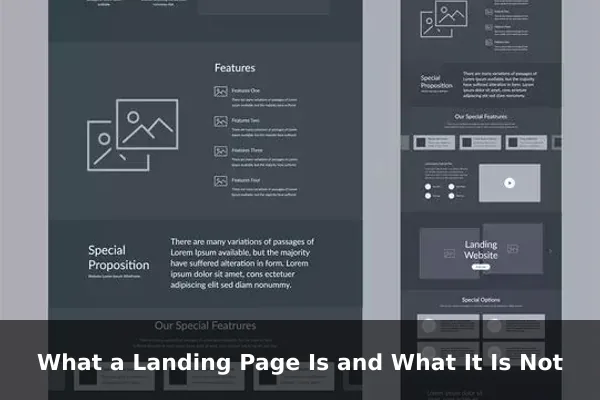
A landing page is a standalone web page created specifically for a marketing or advertising campaign. Visitors arrive on it after clicking a link in an email, a paid ad, a social post, or a search result. Unlike a homepage or product category page, a landing page has one defined goal and removes everything that does not serve that goal.
The key distinction is focus. A homepage introduces an entire brand, offers multiple navigation paths, and serves several audience types at once. A landing page presents a single offer, makes one request of the visitor, and strips away navigation menus, unrelated links, and competing content that might pull a visitor away before they convert.
What a Landing Page Is Not
- A homepage with a contact form placed on it
- A product category page with minor copy edits
- A blog post with a call-to-action added at the bottom
- A generic contact or about page
The defining characteristic is intentionality. Every element on a well-built landing page exists to support a single conversion outcome — whether that is capturing an email address, driving a purchase, or registering a visitor for an event.
Why Landing Pages Matter for Marketing Results
Sending paid traffic to a homepage is one of the most common and costly mistakes in digital marketing. A dedicated landing page removes the guesswork by matching visitor expectations — what they saw in the ad — with what they find on the page. This alignment is what marketers call message match, and it directly affects conversion rates.
Key Benefits of Using Landing Pages
- Improved message match: The headline, offer, and imagery mirror what prompted the visitor to click, reducing confusion and increasing trust immediately.
- Fewer distractions: Without navigation bars, footer links, and competing offers, visitors have one clear path forward.
- Better lead generation: A focused form on a relevant page converts at significantly higher rates than a generic contact form buried within a website.
- Greater ad efficiency: When landing pages convert more visitors, the effective cost per acquisition drops — making every advertising dollar work harder.
- Cleaner conversion tracking: Because each landing page serves a specific campaign, analytics data is attributable and clean, making it straightforward to calculate ROI per campaign.
Common Types of Landing Pages
Not all landing pages serve the same purpose. Choosing the right format for your campaign goal is one of the most important decisions a marketer makes before launch.
Lead Capture Pages
Also called squeeze pages, these collect visitor information — typically a name and email address — in exchange for something valuable such as a free guide, checklist, template, or discount code. The form is the central element and should ask only for what is genuinely needed to start the relationship.
Click-Through Pages
These sit between an ad and a purchase or signup page. Their job is to warm up the visitor, explain the offer in more detail, and prepare them to take the next step. They are widely used in e-commerce and SaaS sales where a purchase decision benefits from additional context before presenting a checkout or pricing page.
Product Launch Pages
Used to build anticipation and capture early interest before a product becomes available. These pages commonly include a countdown timer, early-access pricing details, and a signup form so visitors can be notified at launch.
Webinar and Event Signup Pages
These pages focus on a single event and answer the most important visitor questions: what is it, who should attend, when does it happen, and what will participants gain? The CTA is typically a simple registration form.
Resource Download Pages
These offer a downloadable asset — a whitepaper, industry report, or ebook — in exchange for contact details. They are heavily used in B2B marketing as a top-of-funnel lead generation tool because they trade something genuinely useful for permission to follow up.
The Core Elements of a High-Converting Landing Page
Regardless of type, the most effective landing pages share a consistent set of structural elements. Each plays a specific role in moving visitors toward conversion.
Headline
The headline is the first thing visitors read and the primary factor determining whether they stay or leave. A strong headline communicates the main benefit clearly, matches the language of the source ad or email, and creates immediate relevance. Vague or clever headlines that require interpretation consistently underperform direct, benefit-led alternatives.
Supporting Copy
The body copy expands on the headline’s promise. It should focus on benefits rather than features, speak directly to the visitor’s specific problem, and remain concise enough to hold attention. Bullet points work well for scanning audiences who do not read in full.
Call to Action
The CTA tells visitors exactly what to do next. Effective CTAs are specific (“Download the Free Guide” outperforms “Submit”), action-oriented, and placed where the visitor is most likely to be convinced. Button color, size, and position all influence click rates in measurable ways.
Visuals and Social Proof
Images and short video should reinforce the offer or show the product in use. Avoid generic stock photography that could belong to any website. Pair strong visuals with testimonials, customer logos, review counts, or case study snippets near the CTA to reduce hesitation by showing that others have already taken the step being requested.
Trust Signals
Privacy statements near forms, security badges on purchase pages, and recognizable media or partner logos reduce visitor anxiety. People convert when they trust both the page and the brand behind it.
Practical Best Practices That Improve Performance
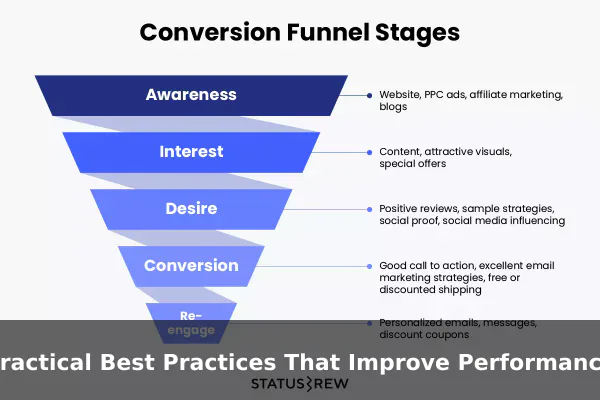
Building a landing page is not a one-time task. Consistent testing and refinement are what separate average pages from high-performing ones. These best practices apply across campaign types and industries.
- Align the page headline with the ad copy. If an ad promises a free budget planning checklist, the landing page headline should reference exactly that offer. Any mismatch creates doubt and increases bounce rates.
- Reduce form fields to the minimum required. Each additional field reduces completion rates. Start with name and email, and only add fields that are genuinely needed to qualify or serve the lead.
- Optimize for mobile devices. A significant share of landing page traffic arrives on smartphones. Pages must load quickly, buttons must be large enough to tap comfortably, and forms must work smoothly without zooming.
- Prioritize page speed. A page that takes more than three seconds to load loses a meaningful percentage of visitors before they see the offer. Compress images, minimize scripts, and use reliable hosting.
- Test one variable at a time. A/B testing is the primary tool for improving performance over time. Change one element per test — headline, CTA text, form length, image — to identify what actually drives any change in conversion rate.
Mistakes That Often Hurt Conversion Rates
Even well-intentioned landing pages fall short when common problems are left in place. Recognizing these issues early can prevent significant campaign waste.
- Vague or generic headlines that do not communicate a clear benefit or mirror the source ad language.
- Too many exit links, including full navigation bars that allow visitors to wander away from the page before converting.
- Long, complex forms that ask for information the offer does not justify collecting at that stage.
- Weak or passive CTAs such as “Learn More” or “Click Here” that state no specific outcome.
- Poor mobile experience, including slow load times, small tap targets, and forms that malfunction on small screens.
- Missing social proof, leaving visitors with no external validation that the offer has value and that others have trusted it.
- Ad-to-page mismatch, where the landing page introduces a different offer or uses noticeably different language than the source ad or email.
How to Measure Landing Page Success
Measuring performance accurately allows marketers to improve pages with confidence rather than guesswork. These metrics provide the clearest picture of how a landing page is working within a campaign.
Conversion Rate
The most direct indicator of landing page effectiveness. It measures the percentage of visitors who complete the desired action. Well-optimized lead generation pages typically convert between 5% and 15% of visitors, depending on offer strength, traffic quality, and page design.
Bounce Rate and Time on Page
A high bounce rate often signals a mismatch between the traffic source and the page content, or a load speed issue that causes visitors to leave before the page renders. Time on page and scroll depth help identify where visitors lose interest, which informs whether key information or the CTA needs to move higher on the page.
Cost Per Lead
For paid campaigns, cost per lead ties conversion performance directly to budget efficiency. Improving conversion rate reduces cost per lead without increasing ad spend — making it one of the highest-leverage optimizations available to a paid media team.
A/B Test Results
Tracking which variants win over time reveals not just isolated improvements but patterns about what messaging and design your specific audience responds to — insights that carry over and improve future campaign pages.
When to Use a Landing Page in Your Campaign Strategy
Not every marketing initiative requires a dedicated landing page, but many campaigns significantly underperform without one. These are the scenarios where landing pages deliver the clearest value.
- Paid advertising: Every paid ad click should land on a page built specifically for that ad’s audience and offer. Sending paid traffic to a homepage is almost always a conversion loss.
- Email campaign offers: When an email promotes a specific asset or discount, the link should go directly to a page that delivers on that exact offer rather than the website homepage.
- Product and feature launches: A launch page builds anticipation, captures early interest, and focuses the announcement on a single conversion action.
- Seasonal promotions: Time-limited offers benefit from dedicated pages with countdown timers and targeted messaging that reinforce urgency without distraction.
- Lead magnets: Free resources, tools, or trials deserve standalone pages that let the value proposition stand clearly without competing against other site content.
- Event registrations: Webinars and in-person events convert better when registration sits on a clean page with no competing calls to action nearby.
As a practical rule, whenever you have a specific audience, a specific offer, and a specific outcome you want to drive, a landing page is the right tool for the job. The more targeted the campaign, the more a dedicated page will outperform routing visitors to general website pages.
Conclusion
Landing pages are not a technical complexity — they are a strategic choice. When marketers align the right offer with the right audience and build a page around a single conversion goal, the results follow: higher conversion rates, lower cost per lead, and cleaner attribution of campaign performance.
Whether you are running paid ads, nurturing email subscribers, or launching a new product, a well-built landing page gives every campaign the focused destination it deserves. Start with the fundamentals — a clear headline, a relevant offer, and a single strong call to action — then refine through consistent testing. The best landing pages improve with every iteration, and even small gains compound meaningfully across a full campaign budget.
