
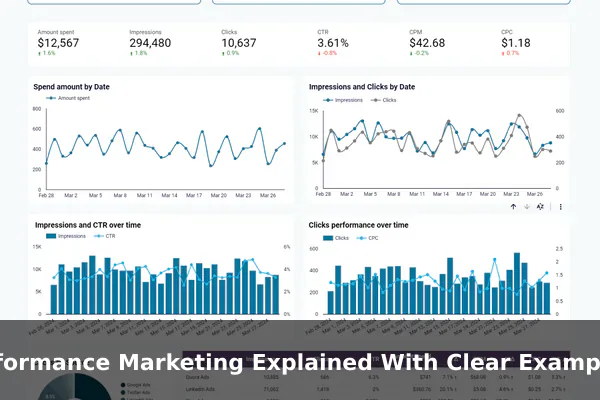
Not all marketing is created equal. Some campaigns are built around visibility — impressions, reach, and brand awareness. But performance marketing works differently. Every dollar spent is tied to a specific, measurable result: a click, a lead, a sale, or a sign-up. Advertisers pay only when something actually happens.
This pay-for-results model has made performance marketing one of the most relied-upon approaches in modern business. Whether you run a small e-commerce store or scale a SaaS product, understanding how performance marketing works — and why so many brands depend on it — can fundamentally change how you think about advertising budgets and growth.
In this guide, you will find a clear explanation of what performance marketing is, how it operates across different channels, what it looks like in real campaigns, which metrics reveal whether your efforts are paying off, and when it makes the most sense to use it.
What Performance Marketing Means in Practice
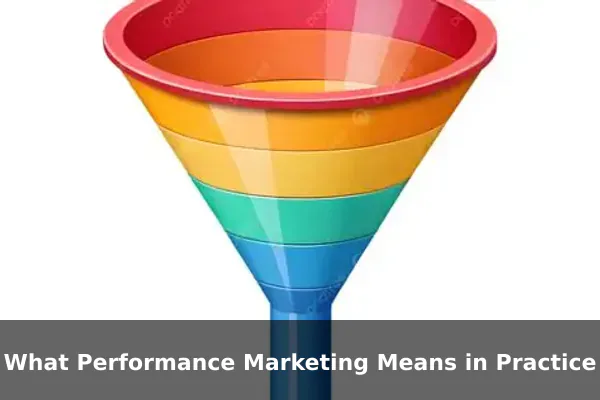
Performance marketing is a form of digital advertising where advertisers pay only when a defined action is completed. That action could be a click on an ad, a form submission, a product purchase, an app install, or any other measurable event that matters to the business.
Unlike traditional advertising — where a brand pays to run a television spot or a print placement regardless of outcome — performance marketing ties spend directly to results. The advertiser, the platform, and any third-party partners all operate under a results-first arrangement.
The Three Parties Usually Involved
- Advertiser: The business that wants to acquire customers, leads, or sales.
- Publisher or Platform: The channel that delivers the ad — Google, Meta, an affiliate network, or a publisher site.
- Audience: The people who see the ad and take (or do not take) the desired action.
This creates clear accountability. If no one clicks, buys, or signs up, the advertiser does not pay — or pays very little. It is a fundamentally different risk profile compared to buying exposure.
How Performance Marketing Works Step by Step
The mechanics of a performance campaign follow a predictable flow. Understanding each stage shows where value is created and where it can easily be lost.
Step 1 — Define the Goal and Conversion Action
Every performance campaign starts with a specific goal. This might be a product purchase, a lead form submission, a free trial sign-up, or a phone call. Being precise matters because every other decision — targeting, creative, bidding strategy — flows from this goal.
Step 2 — Set Up Accurate Tracking
Without reliable tracking, performance marketing collapses. Advertisers install tracking pixels, conversion tags, or UTM parameters to connect ad clicks to on-site actions. Platforms like Google Ads and Meta Ads Manager include built-in conversion tracking. Affiliate networks use unique tracking links per partner.
Step 3 — Launch, Target, and Optimize
The campaign runs with audience targeting based on demographics, interests, search intent, location, or past behavior. As data comes in, the advertiser identifies which ads, audiences, and placements deliver results at the lowest cost. Underperformers are paused; budget shifts toward what works. This iterative loop is where performance marketing gets its real edge.
Step 4 — Report and Scale
Results are measured against clear benchmarks. If a campaign delivers profitable conversions consistently, the budget is scaled. If costs run too high, the campaign is refined or paused before more money is spent.
Common Channels Used for Performance Campaigns
Performance marketing is not tied to one platform. It spans several channels, each with its own strengths and cost structures.
Search Advertising
Google Ads and Microsoft Advertising let advertisers bid on keywords. Ads appear when someone searches for a relevant term. Because the user is actively searching, purchase intent is high — and so are conversion rates. Advertisers pay per click, meaning spend is directly tied to real engagement.
Paid Social Advertising
Platforms including Meta (Facebook and Instagram), TikTok, LinkedIn, and Pinterest allow targeting by interest, behavior, and demographics. Campaigns can be optimized for clicks, leads, purchases, or app installs — all trackable outcomes tied to real business goals.
Affiliate Marketing
Brands partner with publishers, bloggers, or influencers who promote their products in exchange for a commission on each sale or lead generated. The advertiser pays only when a conversion occurs through the affiliate’s unique tracking link — pure performance, zero cost without a result.
Display and Native Advertising
Banner ads across websites (display) or ads that blend with editorial content (native) can be purchased on a performance basis — paying per click or per conversion rather than per impression, keeping costs linked to outcomes.
Clear Examples of Performance Marketing
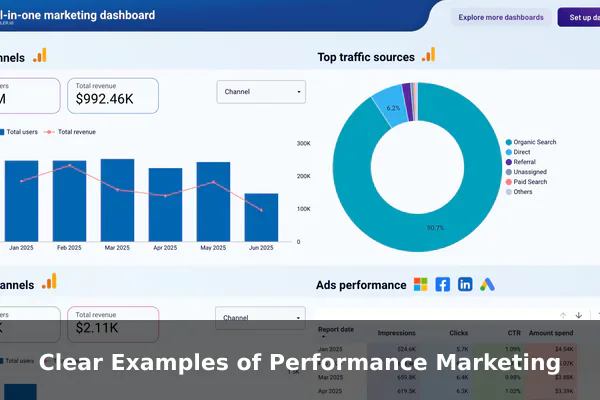
Definitions are useful. Examples make the concept real. Here are three scenarios that show performance marketing in action across different business types.
Example 1 — E-Commerce Sales Campaign
A clothing brand wants to increase online sales for its summer collection. It runs Google Shopping ads and Meta retargeting ads, with purchase tracking installed via a Meta pixel and a Google conversion tag. After two weeks, data shows Meta retargeting delivers a 4x return on ad spend. Budget shifts toward that placement. The brand paid only for clicks and tracked every purchase back to the exact ad that drove it.
Example 2 — SaaS Lead Generation
A project management software company runs LinkedIn ads targeting marketing managers at mid-size companies. The ad drives traffic to a free demo landing page. The company measures cost per lead and refines the campaign by adjusting ad creative and landing page copy until the cost per lead hits a profitable threshold — and then it scales.
Example 3 — Affiliate Promotion
A fitness supplement brand joins an affiliate network and invites health bloggers to promote its protein powder. Each blogger receives a unique tracking link. When a reader clicks and purchases, the blogger earns a 12% commission. The brand pays nothing for traffic alone — only for completed sales.
Main Benefits for Businesses
Performance marketing has grown in popularity for clear reasons. These are the core advantages it delivers compared to traditional advertising.
- Measurable ROI: Every campaign produces clear data. You know exactly what each conversion cost and what revenue it generated.
- Better Budget Control: Spend is tied to outcomes, not impressions. You are not paying for exposure that produces no results.
- Faster Optimization: Real-time data allows quick adjustments. If an ad is not working, you can pause it the same day and redirect spend.
- Scalable Growth: Once a campaign is profitable, increasing the budget scales the results — making growth more predictable and repeatable.
- Clear Attribution: Tracking reveals which ads, keywords, and channels actually drove conversions, removing guesswork from budget decisions.
- Lower Financial Risk: Because you pay for results rather than reach, the risk of an underperforming campaign is significantly reduced.
Key Metrics That Show Whether It Is Working
Performance marketing is driven entirely by numbers. Understanding the most important metrics helps you read campaign data accurately and make decisions grounded in evidence rather than instinct.
Click-Through Rate (CTR)
The percentage of people who clicked your ad after seeing it. A higher CTR signals the ad is relevant and compelling to its audience. A very low CTR usually means the creative or targeting needs adjustment.
Cost Per Click (CPC)
How much you pay on average each time someone clicks. Lower CPC means more traffic for the same budget — but it only matters if those clicks convert into the desired action.
Cost Per Acquisition (CPA)
The total cost to acquire one customer or lead. This is often the most critical metric because it tells you directly whether the campaign is economically sustainable for your business.
Return on Ad Spend (ROAS)
Revenue generated divided by ad spend. A ROAS of 4 means you earned four dollars for every dollar spent. Most businesses require a ROAS above their cost-of-goods-sold threshold to remain profitable.
Conversion Rate
The percentage of ad visitors who complete the desired action. A low conversion rate often points to a landing page problem rather than an ad problem — the traffic is there, but the page is failing to convert it.
Customer Acquisition Cost (CAC)
The total cost to acquire a new customer across all marketing channels. Performance marketing aims to reduce CAC over time while maintaining or improving customer lifetime value.
Common Mistakes and How to Avoid Them
Performance marketing is effective when executed well — and costly when it is not. These are the most frequent errors that waste budget and distort results.
- Weak or missing tracking: If conversions are not tracked accurately, optimization is impossible. Always verify that tracking pixels and tags fire correctly before scaling spend.
- Poor landing pages: Even a strong ad cannot save a slow, confusing, or unconvincing landing page. The page must match the ad’s promise and make the next step immediately obvious.
- Chasing cheap traffic: Low CPC looks attractive, but clicks that never convert are wasted money. Always anchor decisions to cost per acquisition, not cost per click.
- Ignoring creative testing: Ad creative fatigues as audiences see it repeatedly. Regularly test new headlines, images, and calls to action to maintain performance over time.
- Focusing on vanity metrics: High impressions and strong CTR feel rewarding but mean little if they do not produce conversions. Always connect campaign activity to real business outcomes.
- Scaling before stability: Increasing budget too quickly can destabilize targeting algorithms and inflate costs. Scale gradually once results are consistent over multiple days or weeks.
When Performance Marketing Makes the Most Sense
Performance marketing is powerful — but it is not the right fit for every business at every stage. These factors help you judge whether it suits your situation right now.
It Works Best When
- You have a clear, measurable conversion goal such as a purchase, lead, or sign-up.
- Your website or landing page can convert visitors effectively once they arrive.
- You have tracking infrastructure in place — pixels, conversion tags, and analytics.
- Your sales cycle is short enough that attribution between ad click and conversion remains reliable.
- You have budget to test and optimize, not just a single one-time campaign run.
It May Be a Poor Fit When
- Your primary goal is long-term brand building with no short-term conversion target attached.
- Your product has a very long, complex sales cycle where tracking attribution becomes unreliable.
- Your website is not yet ready to convert traffic — in that case, fixing the site first will deliver better returns than running ads to a weak destination.
- You have no data infrastructure to measure results with confidence.
Performance marketing rewards businesses that are prepared to measure results, act on data, and continuously refine their approach. The advantage it creates compounds over time as campaigns improve and learnings accumulate.
Getting the Most from Performance Marketing
Starting with performance marketing does not require a large budget. Many businesses begin with a single channel — often Google Search or Meta Ads — with a modest daily spend. The early goal is not to scale; it is to learn what works. Establish your tracking, define your conversion goal clearly, run a focused campaign, and let the data guide every next decision.
As you discover which channels, audiences, and creatives drive profitable results, expand from there. A business that spends two thousand dollars with precise tracking and rapid optimization will consistently outperform one spending twenty thousand without it. Performance marketing rewards analytical discipline far more than raw budget size.
When every advertising dollar is traceable to a measurable outcome, budgets go further, results are clearer, and businesses can grow with a level of confidence that traditional advertising rarely offered. That accountability is precisely what makes performance marketing one of the most durable and effective approaches available to marketers today.
