
Most people ignore ads. They skip them, block them, or scroll past without a second thought. Yet those same people will spend twenty minutes reading a well-written blog post, download a free guide, and return to a website multiple times before making a purchase decision. This is the fundamental insight behind inbound marketing — and it is why so many businesses have built their entire growth strategy around it.
Inbound marketing is a methodology that attracts customers by creating helpful, relevant content and experiences tailored to them. Rather than pushing messages outward through cold calls, banner ads, or interruptions, it pulls people in by providing value first. As buyers become more self-directed in their research, inbound marketing has become one of the most effective and sustainable growth strategies a business can adopt.
What Inbound Marketing Means in Practice
At its core, inbound marketing is about earning attention rather than buying it. A traditional outbound approach broadcasts a message to a large audience and hopes some of it sticks. Inbound works differently — it creates content and resources that people are already searching for, then makes that content easy to find at exactly the right time.
The philosophy centers on being genuinely useful. A software company that publishes tutorials, checklists, and comparison guides is practicing inbound marketing. A consultant who writes detailed case studies and hosts educational webinars is doing the same. The goal is to become a trusted resource so that when a prospect is finally ready to buy, your brand is already top of mind.
How the Inbound Marketing Process Works
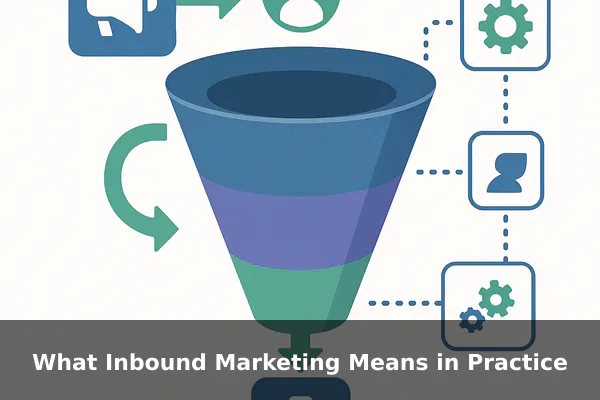
Inbound marketing follows a structured journey that mirrors how modern buyers actually behave. The process typically moves through four interconnected stages:
- Attract — Draw in strangers through blog posts, SEO-optimized content, social media, and video that directly answer their questions and solve real problems.
- Convert — Turn visitors into leads by offering valuable resources such as guides, templates, or webinars in exchange for contact information through focused landing pages and forms.
- Close — Nurture leads through targeted email sequences, personalized content, and timely follow-up until they are confident and ready to become paying customers.
- Delight — Continue providing value after the sale through onboarding support, helpful content, and loyalty programs so customers become enthusiastic advocates who refer others.
Each stage is designed to meet the buyer where they are rather than forcing them to move faster than they are ready to go. This respect for the buyer’s timeline is a core reason inbound generates higher-quality relationships than most outbound methods.
The Core Elements of an Effective Inbound Strategy
Content Marketing
Content is the engine that powers inbound marketing. Blog articles, videos, podcasts, infographics, and downloadable guides educate the audience and build trust over time. The content must address the audience’s specific questions and pain points at each stage of the buying journey, not just serve as thinly disguised promotional material.
Search Engine Optimization
Without visibility, even excellent content goes unread. SEO ensures the right people can discover your content when they search for solutions. This involves thorough keyword research, on-page optimization, internal linking, and building authority through quality backlinks from credible sources.
Email Nurturing
Once someone joins your list, automated email sequences keep them engaged and move them through the funnel at their own pace. Workflows can deliver relevant content based on what the subscriber has already shown interest in, making communication feel personal rather than generic or pushy.
Landing Pages and Lead Magnets
A lead magnet is a free, high-value resource offered in exchange for contact information. Checklists, templates, mini-courses, and original research reports all work well. Landing pages are built specifically to convert visitors into leads by removing distractions and keeping the focus on one clear offer and call to action.
Why Businesses Rely on Inbound Marketing
Inbound marketing has earned its place in modern business strategy for several concrete and measurable reasons:
- Higher-quality leads — People who find you through helpful content are already interested in what you offer. They arrive informed and often much closer to a purchase decision than a cold prospect ever would be.
- Better long-term ROI — A blog post or guide that ranks well in search can generate traffic and leads for years, unlike a paid ad that stops working the moment you stop spending.
- Stronger trust and authority — Consistently useful content positions your brand as a genuine expert, reducing buyer hesitation and shortening the time from first contact to closed sale.
- Lower cost per acquisition over time — As your content library grows and your domain authority builds, the cost of attracting each new lead decreases while the volume of organic traffic increases.
- Compounding results — Unlike one-off outbound campaigns, inbound assets build on each other. Each new piece of content adds to your visibility and reinforces your positioning in the market.
Inbound vs Outbound Marketing: Key Differences
Understanding the contrast between both approaches shows clearly why inbound has become the preferred long-term strategy for businesses that want sustainable, predictable growth.
| Factor | Inbound | Outbound |
|---|---|---|
| Audience intent | Actively searching for solutions | Passive, often uninterested |
| Cost over time | Decreases as assets compound | Constant or increasing |
| Lead quality | Higher — self-qualified prospects | Variable — often cold contacts |
| Speed of results | Slower to build, longer lasting | Faster initial reach, short-term |
| Trust level | Built through demonstrated expertise | Must overcome interruption barrier |
Both approaches can work in combination, but inbound tends to deliver more sustainable results and better alignment with how buyers actually make decisions today.
Examples of Inbound Marketing Tactics That Convert
Abstract strategies become far clearer with real examples. Here are inbound tactics that consistently produce measurable results across industries:
- SEO blog articles — A financial advisory firm writes a thorough guide on retirement planning strategies that ranks on page one of Google, attracting thousands of qualified readers every month without any ad spend.
- Downloadable templates — A project management tool offers a free project timeline spreadsheet in exchange for an email address, building a highly relevant list of prospective users.
- Webinars — A marketing agency hosts monthly live sessions on paid advertising strategy, converting engaged attendees into consulting clients over time.
- Case studies — A B2B software company publishes detailed results from client implementations, giving skeptical prospects the social proof they need to move forward with confidence.
- Email drip sequences — A coaching business sends a five-part email series to new subscribers, each message building on the last and closing with a soft invitation to book a discovery call.
Common Mistakes That Weaken Inbound Results
Inconsistent Publishing
Inbound marketing requires sustained effort over time. Many businesses start strong and then slow down, which undermines content momentum and allows search rankings to slip. A realistic publishing schedule that is actually maintained will consistently outperform an ambitious one that gets abandoned after three months.
Weak Keyword Targeting
Publishing content without researching what people actually search for means producing articles that nobody finds. Effective inbound marketing always begins with understanding the specific language, phrases, and questions your target audience uses when looking for help.
Missing or Weak Calls to Action
Content that does not guide readers to a logical next step leaves conversions on the table. Every piece of content needs a clear, relevant call to action matched to the reader’s likely stage in the buying journey — awareness content should invite further reading, while decision-stage content should invite direct contact or a demo.
Skipping Lead Nurture
Capturing a lead’s contact information without a follow-up plan wastes all the effort that went into attracting them. Email nurturing sequences are essential for keeping prospects engaged, building confidence, and staying top of mind until they are ready to take action.
How to Start an Inbound Marketing Plan
Building an effective inbound marketing strategy does not require a large team or a massive budget. A focused, consistent approach always outperforms a scattered one.
- Define your audience — Identify exactly who you are trying to reach, what problems they face, and what questions they ask at each stage of their decision journey.
- Choose your core topics — Select three to five subject areas where you have genuine expertise and where your audience has real, recurring questions worth answering in depth.
- Map content to funnel stages — Create awareness content for people just discovering the problem, consideration content for those evaluating options, and decision content such as case studies and comparison guides for those nearly ready to buy.
- Set measurable KPIs — Track organic traffic, email sign-up rates, lead-to-customer conversion rates, and cost per acquisition so you can improve based on actual data rather than guesswork.
- Publish consistently and optimize — Maintain a realistic schedule, monitor what performs well, and revisit older content regularly to keep it accurate and competitive in search results.
Inbound marketing is not a short-term campaign. It is a long-term commitment to creating genuine value for your audience. Businesses that stay consistent report stronger lead quality, better brand authority, and more sustainable growth than those relying solely on paid or interruptive methods.
If you are starting out, keep the scope small and the focus tight. Choose one channel, concentrate on a handful of core topics, and measure results over three to six months. The compounding nature of inbound means the effort you put in today will continue generating returns long after the initial work is done.
