
Every time you type a search query and see “Sponsored” at the top of the results page, that is pay-per-click advertising at work. PPC is one of the most popular forms of digital advertising because the cost model is refreshingly direct: you only pay when someone actually clicks your ad. That mechanic makes PPC accessible to a solo founder testing a new product idea and equally valuable to an established brand scaling demand on a tight timeline.
For beginners, the technical vocabulary — bid strategies, quality scores, match types, conversion tracking — can feel overwhelming before the pieces connect. This guide explains how PPC works, why businesses rely on it, and what steps you need to take to launch and manage your first campaign without burning through your budget before you see results.
What Pay-Per-Click Advertising Actually Means
Pay-per-click advertising is a model where advertisers pay a fee each time a user clicks their ad. Rather than paying a flat rate for exposure, you pay for actual traffic. The most common PPC channel is search engine advertising, where your ads appear alongside organic results when someone searches a relevant keyword. PPC ads also run on social platforms like Facebook, Instagram, LinkedIn, and YouTube, as well as on websites through display networks like the Google Display Network.
How the Ad Auction Works
Most PPC platforms use a real-time auction to determine which ads appear and in what order. When a user searches, the platform evaluates every advertiser targeting that query and weighs bid amount, ad relevance, and expected click-through rate together. The highest bidder does not automatically win — a highly relevant, well-written ad can outrank a competitor willing to pay significantly more.
Why Businesses Use PPC
PPC fills a gap that few other marketing channels can match: speed. Unlike SEO, which takes months to build momentum, a PPC campaign can drive targeted traffic to your site within hours of launch. That immediacy makes it invaluable for product launches, seasonal promotions, and time-sensitive offers where waiting is not an option.
- Precise targeting: Reach users by keyword, location, device, time of day, or demographic profile.
- Budget control: Set daily or monthly spending limits so you never exceed what you can afford.
- Measurable results: Every click, conversion, and dollar spent is tracked and reported in real time.
- Speed to market: Campaigns can go live the same day they are created.
- Scalability: Increase spend on what works and pause what does not without penalties or contracts.
Core PPC Terms Every Beginner Should Know
Before setting up a campaign, it pays to understand the vocabulary you will encounter every day.
- Keyword: The search term you target with your ad.
- Bid: The maximum amount you are willing to pay for one click.
- CPC (Cost Per Click): The actual amount charged for each click received.
- CTR (Click-Through Rate): The percentage of people who see your ad and click it.
- Quality Score: A platform rating based on ad relevance, expected CTR, and landing page experience — higher scores lower your costs.
- Conversion: A desired action completed after a click, such as a purchase, sign-up, or phone call.
- Ad Rank: Your position in the auction, determined by bid and quality factors combined.
- Landing Page: The specific page users reach after clicking your ad.
- ROAS (Return on Ad Spend): Revenue earned for every dollar invested in ads.
How a Basic PPC Campaign Works
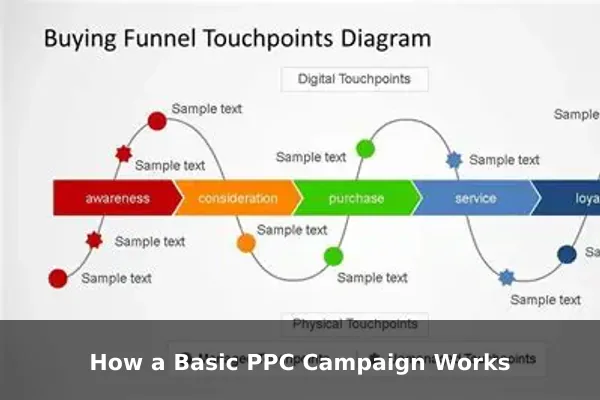
A PPC campaign follows a clear path from search to result. Understanding each stage helps you identify where to improve.
- Keyword targeting: You select the search terms your ideal customers are likely to use.
- Ad creation: You write headlines and descriptions that match user intent and communicate your value clearly.
- Auction: When a user searches, the platform runs a real-time auction among all eligible advertisers.
- Ad display: If your ad wins, it appears on the results page in a labeled sponsored position.
- Click and visit: The user clicks and arrives on your chosen landing page.
- Conversion: The user completes the action you want — buying, signing up, or making contact.
Each stage is an opportunity to win or lose. A compelling ad that sends traffic to a confusing page will not convert. A perfectly designed landing page cannot compensate for targeting the wrong audience. Optimizing each step is where lasting PPC results come from.
How to Set Up Your First PPC Campaign
Launching a first campaign is more straightforward than most beginners expect. Work through these steps in order to avoid the most common setup mistakes.
Step 1 — Define Your Goal
Decide what you want the campaign to accomplish. Common goals include generating leads, driving product sales, increasing phone calls, or growing an email list. Your goal shapes every decision that follows, from keyword choice to landing page design.
Step 2 — Choose a Platform
Google Ads is the most widely used starting point because it reaches users who are actively searching for a solution. Microsoft Advertising covers Bing users with less competition and often lower costs. Facebook and Instagram Ads work well for interest-based and visually driven campaigns. Match the platform to where your target audience already spends time.
Step 3 — Research Keywords
Use a keyword research tool to find the terms your audience actually searches for. Focus on intent: a phrase like buy running shoes online signals purchase readiness, while history of running shoes does not. Start with specific, intent-rich keywords rather than broad generic terms to keep early spending focused.
Step 4 — Write Your Ads
Your headline should match the search query closely so the ad feels immediately relevant. The description should highlight a key benefit, include a clear call to action, and differentiate you from competitors. Specific and direct language consistently outperforms vague or generic copy.
Step 5 — Build a Relevant Landing Page
Send traffic to a page that directly fulfills the ad promise. If your ad promotes a free consultation, the landing page must open with that offer — not your general homepage. Alignment between the ad and landing page is one of the strongest predictors of conversion rate.
Step 6 — Install Conversion Tracking
Set up tracking before the campaign goes live so the platform records when a click becomes a conversion. Without this data, you have no reliable way to know which keywords and ads are actually producing results.
Budgeting and Bidding Without Overspending
PPC gives beginners more cost control than almost any other advertising format. Understanding the basic options helps you stay within limits while gathering useful data.
- Daily budget: Cap how much you spend per day. The platform will not exceed this amount.
- Manual bidding: You set the maximum CPC per keyword. Best for tight control in the early stages when you have limited data.
- Automated bidding: The platform adjusts bids in real time to hit a target such as lowest CPC or a specific ROAS. Works best once you have sufficient conversion history.
- Match types: Exact match targets only precise queries; phrase match captures close variants; broad match reaches the widest range. Begin with phrase or exact match to avoid irrelevant clicks.
- Negative keywords: Exclude search terms that are off-topic so you do not pay for traffic that will never convert.
Common PPC Mistakes Beginners Make
Most early PPC failures trace back to a short list of avoidable errors. Recognizing them before you launch protects both your budget and your confidence in the channel.
- Targeting overly broad keywords that pull in irrelevant traffic at high cost.
- Sending all clicks to a generic homepage instead of a purpose-built landing page.
- Skipping negative keywords and paying for searches completely unrelated to your offer.
- Launching without conversion tracking and guessing at results instead of measuring them.
- Pausing campaigns after only a few days before enough data exists to draw any conclusions.
- Running a single ad per ad group with no variation to test against.
How to Measure PPC Performance
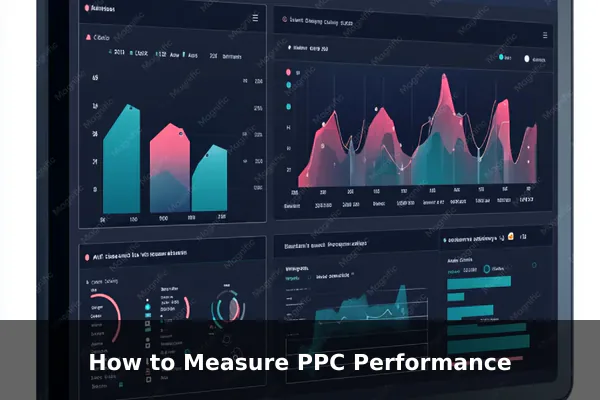
Tracking the right numbers keeps you from drawing wrong conclusions and wasting budget on what is not working. Focus on these indicators when you are starting out.
- Clicks: Total visits driven by the ad — the base volume metric.
- CTR: A low rate suggests the ad copy is not resonating with its audience or the keyword match is off.
- CPC: Higher than expected costs may indicate strong competition or a low Quality Score dragging down your ad rank.
- Conversion rate: The percentage of clicks that result in the desired action — the clearest signal of landing page effectiveness.
- Cost per conversion: How much you spend on average to acquire one lead or sale, the most actionable budget metric.
- ROAS: Revenue generated per dollar spent — the final test of whether the campaign is profitable.
Review these metrics weekly while campaigns are new. Once performance stabilizes, a bi-weekly review is usually sufficient to catch issues before they become expensive.
When PPC Works Best for a Business
PPC is a powerful tool, but it delivers its strongest results in specific situations. Knowing when it fits prevents misplaced expectations.
- Product or service launches where you need traffic before organic rankings exist.
- Local lead generation for service businesses reaching customers in a defined geographic area.
- Seasonal campaigns tied to holidays, events, or limited-time promotions that cannot wait for organic growth.
- Demand testing when you want to validate whether a market exists before investing heavily in content or development.
- Retargeting to re-engage visitors who left your site without completing a conversion.
Getting Better Results Over Time
A PPC campaign is not a one-time setup. The advertisers who see sustained returns treat their campaigns as ongoing experiments rather than fixed systems that run on autopilot.
Refine Keywords Regularly
Review your search term reports weekly. Add high-performing queries as exact-match keywords. Move irrelevant terms into your negative keyword list. Over time this process focuses your entire budget on the traffic most likely to convert.
Test Ad Copy Continuously
Run two or three ad variations per ad group at the same time. Test different headlines, descriptions, and calls to action. Let the data determine which version wins, pause the underperformers, and introduce new challengers to keep improving.
Improve Landing Pages Incrementally
Small changes to a landing page — a clearer headline, a more prominent button, removing off-topic distractions — can lift conversion rates meaningfully without increasing ad spend. A better conversion rate directly lowers your cost per acquisition across the entire campaign.
Shift Budget Toward Top Performers
Identify the campaigns, ad groups, and keywords delivering the best cost per conversion and ROAS. Move budget away from underperformers toward those proven winners. This compounding reallocation is how experienced PPC managers consistently improve results quarter over quarter.
Pay-per-click advertising rewards consistency, patience, and a genuine willingness to learn from data. The beginner who starts with a focused goal, tracks every conversion, and makes small improvements based on real numbers will outperform anyone who launches a large campaign with no measurement plan. Start small, control your budget, and let the data guide each decision — that straightforward approach is what turns a first PPC campaign into a reliable and scalable growth channel.
