
Viral marketing is one of the most coveted outcomes in the modern marketing playbook — and one of the least understood. Most businesses have seen a competitor’s video rack up millions of views overnight or watched a social media challenge take over their feed for two weeks straight. What looks like pure luck from the outside is often the result of deliberate strategy, psychology-driven creative decisions, and a well-timed distribution push.
The term viral borrows from biology: an idea spreads from person to person the way a virus spreads through a population. Unlike paid advertising, where reach depends on budget, viral marketing relies on the audience doing the heavy lifting. One person shares with five, those five share with twenty-five, and the cycle compounds. When it works, the cost per impression drops dramatically and brand awareness grows faster than any paid channel could sustain.
This article unpacks what viral marketing really is, why certain campaigns catch fire while others go nowhere, and what a practical strategy looks like from concept to launch to measurement. Whether you are building your first campaign or refining an approach that has underperformed, the framework here applies to both.
What Viral Marketing Actually Means
Viral marketing is a strategy that encourages individuals to spread a marketing message on behalf of a brand, typically through sharing content across social media, messaging apps, email, or word of mouth. The defining feature is audience-driven distribution: the brand starts the spark, but the audience carries the flame.
The concept is not new. Chain letters and referral programs existed long before the internet. What changed is speed and scale. A video posted at noon can reach a million people by midnight if the conditions are right. That compression of time is what makes virality so attractive to marketers and so difficult to engineer consistently.
Viral vs. Word-of-Mouth Marketing
Viral and word-of-mouth marketing are closely related but not identical. Word-of-mouth happens organically, often after a customer has a strong experience with a product or service. Viral marketing is deliberately designed to be shared. It builds in the mechanics that make sharing feel natural or rewarding, rather than waiting for good experiences to generate spontaneous conversation on their own.
The Sharing Coefficient
Marketers sometimes describe virality using a growth coefficient: if each person who sees a piece of content shares it with more than one other person on average, the audience grows exponentially. If the coefficient falls below one, the campaign burns out. Understanding this math clarifies why even small improvements in shareability have outsized effects on total reach — a campaign is not binary between viral and non-viral, but exists on a spectrum that responds to design choices.
Why People Share Campaigns
Before building a campaign, it is worth understanding what motivates people to share content in the first place. Research into online sharing behavior consistently identifies a handful of core motivations:
- To bring valuable or entertaining content to others in their network
- To define themselves and signal what they care about
- To maintain and strengthen relationships through shared references
- For self-fulfillment and a sense of participation in something larger
- To advocate for causes or brands they genuinely believe in
Effective viral campaigns tap into at least one of these motivations. The most successful ones trigger multiple simultaneously, which is why they spread across such diverse audience segments.
Emotion Is the Engine
Content that produces a strong emotional response — joy, awe, anger, surprise, nostalgia — is shared at significantly higher rates than neutral content. The emotion does not have to be positive. Some widely shared campaigns rely on outrage or sadness. What matters is intensity. Low-arousal emotions like mild satisfaction or contentment rarely produce a share, because they do not create the urgency to pass something along.
Social Currency and Identity
People share content that makes them look good to their network. If sharing a campaign signals intelligence, taste, generosity, humor, or cultural awareness, the audience is far more likely to pass it along. Brands that understand their audience’s identity carefully can craft messages that feel like badges worth wearing publicly — a powerful and often underestimated sharing driver.
Practical Value
Useful content spreads. How-to videos, actionable guides, and tools that solve a real problem get forwarded because sharing them is an act of helpfulness. This is why tutorial content and comparison resources consistently outperform pure entertainment in B2B spaces, where being seen as a knowledgeable resource carries social currency of its own.
Core Elements of a Viral Marketing Strategy
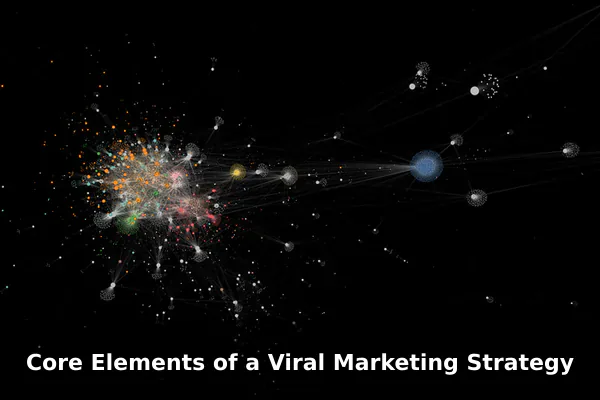
Virality is partly luck, but the conditions that make luck possible are entirely within a marketer’s control. A strong viral marketing strategy is built from several interconnected decisions made before any content is produced.
A Clear and Specific Audience
Campaigns that try to appeal to everyone tend to resonate with no one. Defining a narrow, specific audience makes the message stronger and increases the chance that it will feel personally relevant enough to share. The audience definition should include not just demographics but psychographics — values, humor preferences, platform behavior, and pain points. A message that feels written for a specific person travels farther than one designed for a crowd.
A Single, Memorable Hook
The hook is the idea that makes someone stop scrolling and pay attention. It should be expressible in one sentence. If you cannot describe what makes your campaign interesting in one sentence, the audience will not be able to either — which makes word-of-mouth transmission significantly harder. Great hooks often involve an unexpected angle, a bold claim, a familiar situation reframed in a surprising way, or a creative mechanic that invites participation.
Format Fit for the Platform
Different platforms have different native content formats. Short-form vertical video dominates on TikTok and Instagram Reels. Long-form discussion threads perform on Reddit and X. Meme templates travel across Discord servers and group chats. Choosing the wrong format for the platform is one of the most common technical mistakes in viral campaign planning. Content that feels native to a platform earns more trust and shares than content that was clearly designed for a different medium.
Frictionless Sharing Mechanics
If sharing requires effort, most people will not follow through. Every additional click or step between I like this and I shared this reduces the share rate meaningfully. The best viral campaigns include built-in sharing mechanics: a challenge with a branded hashtag, a quiz result that generates a shareable graphic, a referral link that rewards the sender, or an open-ended prompt that invites audience response and makes participation feel fun rather than effortful.
A Goal Beyond Views
Virality without a business goal is entertainment, not marketing. Before launching, define what success looks like beyond view counts: new email subscribers, trial sign-ups, product purchases, brand search volume increases, or press coverage. This goal shapes the call to action and determines how you evaluate whether the campaign delivered real business value — not just a moment of attention.
How Campaigns Spread Across Channels
Understanding distribution mechanics helps marketers choose where to seed a campaign and how to sustain momentum once it starts moving. Virality rarely happens in a single channel; it typically cascades across several simultaneously.
Social Media Algorithms and Feed Amplification
Platforms like TikTok, Instagram, and YouTube use engagement signals — watch time, comments, shares, saves — to decide how widely to distribute content. Early engagement is disproportionately important: content that earns strong reactions in the first few hours signals quality to the algorithm, which then pushes it to broader audiences. This is why the seeding strategy matters as much as the content itself. A strong post with a weak launch often dies before the algorithm notices it.
Influencer and Creator Networks
Influencers act as distribution multipliers. A creator with a loyal, niche audience can introduce a campaign to exactly the right people at exactly the right moment. Micro-influencers — those with 10,000 to 100,000 followers — often deliver higher engagement rates and more trusted recommendations than mega-influencers, making them particularly valuable seeding partners for campaigns targeting specific communities rather than mass audiences.
Community Platforms and Forums
Reddit, Discord, Quora, Facebook Groups, and niche online communities are often overlooked in viral strategy. Content shared within communities feels more authentic than content pushed through a brand channel, and communities have their own organic amplification dynamics — upvotes, reposts, and cross-posting between related groups. Brands that earn genuine community attention often see longer-lasting viral cycles than those relying purely on algorithmic feed distribution.
Press and Earned Media
A campaign that reaches a certain threshold of cultural attention often attracts media coverage, which resets the sharing cycle with a new audience. Journalists, podcast hosts, and newsletter writers are always seeking culturally relevant stories. Building a press list and proactively pitching an interesting campaign at the right moment can dramatically extend its lifespan and introduce it to audiences who are not reachable through social channels alone.
Timing and Cultural Relevance
Campaigns that tap into a current conversation, seasonal moment, or trending format spread faster because they already have momentum from the broader cultural context. This is not about chasing trends reactively; it is about identifying predictable cultural windows in advance and planning content that fits naturally within them, so the campaign feels timely rather than calculated.
Examples of Viral Marketing Campaigns and What Made Them Work
Studying real campaigns reveals patterns that inform future strategy far better than abstract theory. Here are several well-known examples and the specific mechanics behind their success.
The ALS Ice Bucket Challenge
In 2014, the ALS Association’s Ice Bucket Challenge raised over $115 million in eight weeks and became one of the most successful fundraising viral campaigns in history. Its virality came from several interlocking mechanics: participants were challenged by name, creating personal accountability; the nomination chain made the social spread explicit and visible; and the video format — watching someone get drenched in ice water — was inherently entertaining regardless of cause knowledge. The charitable element added emotional depth that made sharing feel meaningful rather than merely performative.
Dove’s Real Beauty Campaign
Dove’s Real Beauty campaign succeeded not through a challenge mechanic but through emotional storytelling rooted in a genuine consumer insight. The observation that women are their own harshest critics resonated so deeply that the content was shared as an act of empathy and solidarity. The campaign worked because it treated shareability as a byproduct of emotional truth. People were not sharing an ad — they were sharing a feeling they recognized, which is far more powerful than sharing a piece of branded content.
Dollar Shave Club Launch Video
Dollar Shave Club’s 2012 launch video went viral within hours and drove so many sign-ups that their servers crashed. The hook was deadpan humor: a deliberately lo-fi video that mocked the absurdity of expensive razor pricing. It worked because it was genuinely entertaining, it communicated a clear value proposition in under two minutes, and the product was low-risk enough that impulse purchases were easy. Crucially, the video had a direct conversion goal built into its structure — entertainment and sales call were unified rather than competing.
Spotify Wrapped
Spotify Wrapped is a recurring viral moment, not a one-time campaign. Each December, Spotify generates personalized annual listening data for each user in the form of shareable cards. Users post their Wrapped results because doing so is an act of self-expression — it signals taste, identity, and cultural alignment. Spotify amplifies the moment through distinctive visual design (Wrapped cards are immediately recognizable in a feed) and precise timing (released during a naturally reflective period at year’s end). The brand earns massive organic reach annually with minimal paid media — the model of a perfectly engineered sharing mechanic.
How to Build a Viral Campaign Step by Step
Most viral campaigns that succeed are not accidental. They follow a deliberate process, even when the final outcome feels spontaneous to the audience watching it unfold.
- Define the audience and goal. Start with a specific audience segment and a measurable business objective. Everything else — format, hook, platform, tone — flows from this decision.
- Develop and pressure-test the hook. Brainstorm several potential hooks and test them informally by sharing them with people outside the marketing team. Look for the idea that produces an immediate emotional or humorous response without requiring explanation.
- Choose the format and platform. Match the content format to the platform where your audience is most active. Build a native version for that environment rather than repurposing something made for a different channel.
- Build in sharing mechanics. Decide how the audience will share: a hashtag challenge, a shareable result, a referral incentive, a response prompt, or a duet invitation on video platforms. Make the act of sharing feel rewarding or at least effortless.
- Plan the seeding strategy. Identify the first wave of distributors — internal teams, loyal customers, creator partners, community moderators — and coordinate a concentrated launch window. Early engagement signals are disproportionately important for algorithmic distribution.
- Monitor and iterate in the first 48 hours. Watch engagement signals closely. If one variation is outperforming others, allocate more distribution toward it. If comments reveal an angle resonating unexpectedly well, incorporate it into follow-up content and amplification messaging.
- Measure against the original goal. Do not allow view counts to become the only metric. Track the business outcomes you defined at the start and use them to evaluate the campaign’s true return.
Common Reasons Viral Marketing Fails
Understanding failure patterns is as useful as studying successes. Most viral campaigns that underperform share recognizable failure points.
- Weak or generic hook. The most common failure is simply not being interesting enough to share. Being inoffensive and competent is not enough. The hook needs to produce a clear, immediate reaction in the target audience.
- Audience mismatch. Content designed for one demographic occasionally lands with a completely different one. When that happens, shares may be high but conversions are low and the business goal goes unmet. Audience precision matters more than raw reach numbers.
- Forced brand integration. When the product or brand feels like an interruption rather than a natural part of the campaign, audiences disengage immediately. The best viral campaigns make the brand feel central to the entertainment, not incidental to it.
- Overproduction. High production values can actually hurt virality because polished content reads as advertising, which audiences instinctively resist. Authenticity and raw energy frequently outperform technical perfection in sharing behavior.
- No distribution plan. Posting content and waiting for it to take off is not a strategy. Without a seeding plan, even genuinely strong content often fails to cross the early engagement threshold that algorithmic amplification requires.
- Poor timing. A campaign launched into a crowded news cycle or during the wrong seasonal moment loses the attention it needs. Timing is a strategic decision, not an afterthought.
How to Measure Viral Marketing Results
Measuring virality requires looking beyond surface-level vanity metrics to understand whether the campaign delivered actual business value. The right measurement framework tracks several layers simultaneously.
Sharing and Amplification Metrics
- Share rate: the percentage of people who viewed the content and then shared it — a direct measure of voluntary audience distribution
- Earned reach: total impressions generated by shares rather than paid placement, showing the organic multiplier effect
- Hashtag or challenge volume: total posts using the campaign’s associated hashtag, indicating active participation rather than passive consumption
Engagement Quality
- Comment sentiment: are people engaging positively and creating conversation, or reacting with skepticism?
- Save rate: on Instagram and similar platforms, saves indicate perceived value and predict longer-term return visits
- Video completion rate: indicates whether the content held attention long enough to deliver its core message
Business Impact Metrics
- Referral traffic: new website sessions attributed to social sharing, tracked through UTM parameters
- Brand search volume: spikes in branded search queries following a campaign indicate that awareness has grown beyond the campaign’s direct reach
- Conversion rate from campaign traffic: whether the people the campaign attracted are taking the desired action
- Customer acquisition cost: comparing the cost per acquired customer from the viral campaign against other paid acquisition channels reveals the true efficiency gain
Tracking these metrics across campaigns over time builds a clearer picture of which viral elements reliably drive business results versus which elements produce temporary attention spikes without lasting value.
Conclusion
Viral marketing is not a hack or a shortcut — it is a discipline that combines psychology, creative strategy, platform mechanics, and distribution planning into a coherent campaign architecture. The campaigns that appear effortless almost always reflect deliberate decisions made long before the content was published: the right audience, the right emotional hook, the right platform, and a seeding plan designed to give early momentum the push it needs.
The goal is not to manufacture virality on demand, which is beyond any marketer’s guaranteed control. The goal is to build campaigns that have everything in place to succeed when conditions align — content that people genuinely want to share, mechanics that make sharing easy, and a launch plan that generates the initial signal required for broader distribution. Do that consistently, measure the outcomes honestly, and the probability of a breakout campaign rises significantly with each attempt.
