
Every prospect who lands on your website is not equally ready to buy. Some are just browsing. Others are actively comparing options. A few are one click away from completing a purchase. The difference between these groups comes down to buyer intent — the underlying motivation behind a person’s action at any given moment. When marketers understand intent, they stop wasting budget on the wrong messages at the wrong time.
Buyer intent changes what content to show, which ad to serve, and how aggressively to follow up. A prospect reading a general blog post needs a different response than one who just searched for a specific product and its pricing. This article explains what buyer intent is, breaks down the four main types, shows real examples from actual marketing situations, and gives you a practical framework for turning intent signals into better campaign results.
What Buyer Intent Means in Marketing
Buyer intent refers to the likelihood that a person is actively moving toward a purchase decision. It is not just about interest — it is about readiness. A person who searches “what is email marketing” is interested in the topic. A person who searches “best email marketing platform for small business under $50 a month” has clear purchase intent. The difference matters enormously for targeting and messaging.
In marketing, intent is a signal. It tells you where someone is in their journey and what they are likely to do next. Marketers use intent data to prioritize leads, personalize content, and decide which channel or message will move a prospect forward without pushing them away prematurely.
Intent is also different from demographics or browsing history alone. Two people with identical profiles can have completely different intent at a given moment. One is researching casually; the other has a budget approved and a deadline to decide. Recognizing this distinction allows marketers to treat prospects as individuals rather than static audience segments.
The Main Types of Buyer Intent
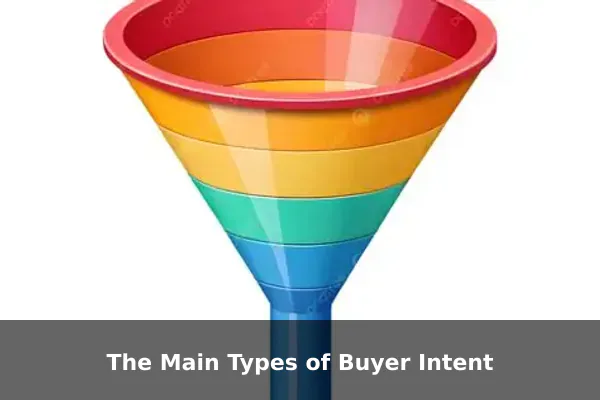
Buyer intent is commonly divided into four types. These align closely with the kinds of searches people perform and the actions they take across digital channels. Each type signals a different level of readiness and calls for a different marketing response.
Informational Intent
This is the earliest stage. The person wants to learn something. They are not looking for a specific product — they are looking for answers and context. Searches like “how does content marketing work” or “what is a sales funnel” fall here. People with informational intent are in the awareness phase. Educational blog posts, explainer videos, beginner guides, and free resources work best for this audience.
Navigational Intent
The person already knows where they want to go. They are looking for a specific brand, website, or tool. A search like “HubSpot login” or “Mailchimp pricing page” shows navigational intent. Marketers mainly encounter this when prospects are already familiar with a brand. The marketing job here is to make sure the destination is easy to reach, loads fast, and delivers on what the person expected to find.
Commercial Intent
Commercial intent — sometimes called investigational intent — is when a person is actively researching before making a decision. They are comparing options, reading reviews, and evaluating features. Searches like “best CRM for small business” or “HubSpot vs Salesforce” fit this category. This is a high-value intent stage because the person is close to a decision and just needs the right information to push them toward a specific choice.
Transactional Intent
This is the highest-intent stage. The person is ready to take action — buy, sign up, book a demo, or start a free trial. Searches like “buy Mailchimp Pro plan” or “schedule a Salesforce demo” are transactional. This is where direct CTAs, dedicated product landing pages, limited-time offers, and retargeting ads perform best because friction is the only thing standing between the prospect and conversion.
Practical Examples of Each Intent Type
Understanding intent types in theory is useful. Seeing them play out in real marketing situations makes them immediately actionable for campaign planning and content decisions.
Informational Intent in Action
- A user searches “how to reduce customer churn” and lands on an educational blog post from a SaaS company that offers customer success software.
- A small business owner watches a YouTube tutorial on “how to write a product description that sells.”
- A marketing coordinator reads a guide titled “what is conversion rate optimization” after their manager mentioned it in a meeting.
The right marketing response at this stage is to provide genuine value without a hard sell. Blog content, free downloadable guides, and newsletter opt-ins work well here. The goal is to earn trust and bring the prospect into your ecosystem so you can engage them as intent grows.
Navigational Intent in Action
- Someone types “Shopify admin login” directly into Google instead of using a bookmarked URL.
- A user searches “Canva social media templates” to go directly to that section of the Canva site.
These users already know the brand. The marketing job is to make sure branded pages rank correctly and the path from search to destination is seamless. Paid branded search campaigns can protect this traffic from competitors bidding on your brand name.
Commercial Intent in Action
- A marketer searches “top email marketing tools for ecommerce” and reads a comparison article listing five platforms side by side.
- A business owner visits G2 or Capterra to read verified user reviews of project management software.
- A prospect clicks a retargeting ad that leads to a competitor comparison landing page.
Comparison pages, detailed case studies, feature breakdowns, and customer testimonials are the right tools for commercial intent. The goal is to be the most convincing option on the shortlist — and to address the specific objections this type of buyer typically carries.
Transactional Intent in Action
- A user clicks a Google Shopping ad for a specific product model and sees the price, reviews, and a direct buy button.
- Someone fills out a “Request a Demo” form on a B2B SaaS product page after visiting the site twice in one week.
- A prospect clicks “Start Free Trial” from a follow-up email after spending time on the pricing page.
These are the moments marketers optimize hardest for. Clear CTAs, fast-loading landing pages, social proof near the conversion point, and minimal form fields are all critical at this stage.
How to Spot Buyer Intent Signals
Intent does not announce itself directly — it must be inferred from observable signals across your marketing stack. Here are the most reliable sources to monitor:
Search Data and Keyword Patterns
Long-tail keywords containing price references, brand names, “best,” “vs,” “review,” or “buy” typically indicate commercial or transactional intent. Broad question-based keywords signal informational intent. Tools like Google Search Console, SEMrush, and Ahrefs help you categorize keyword traffic by intent type and spot where your current content is missing coverage.
Website Behavior Patterns
Pages visited in sequence tell you a great deal. A user who reads a blog post, then visits the features page, then checks pricing three times in one session is showing strong commercial or transactional intent. Tools like GA4, HubSpot, and Hotjar can track these behavioral patterns and surface high-intent visitor signals automatically.
Email Engagement Signals
Someone who clicks a “see pricing” or “compare plans” link inside an email is showing more intent than someone who merely opened the message. Link-click behavior inside email sequences is a practical intent filter, especially when that data flows into a CRM that can trigger a sales alert or a more targeted follow-up.
Form Submissions and Direct Requests
Demo requests, contact sales forms, and free trial sign-ups are among the highest-intent actions a prospect can take short of completing a purchase. When these fire, the response time and the quality of the first follow-up interaction matter significantly for conversion.
Third-Party Intent Data
In B2B marketing, platforms like Bombora, G2 Buyer Intent, and 6sense aggregate behavioral signals from across the web — showing which companies are actively researching specific topics or product categories. This is especially valuable when purchase cycles are long and involve multiple stakeholders who may never visit your site directly.
How Marketers Can Use Intent Data
Collecting intent data is only useful if it changes what you do next. Here is how to match your marketing response to each intent level:
- Informational intent: Serve educational blog posts, how-to videos, newsletters, and downloadable guides. Avoid hard pitches at this stage — they signal a mismatch and can damage trust before it is established.
- Navigational intent: Protect and optimize branded landing pages, login pages, and product pages. Run branded paid search campaigns so competitors cannot intercept your known traffic.
- Commercial intent: Use comparison content, customer testimonials, case studies, free trials, and retargeting to stay visible while the prospect evaluates their options. Make differentiation clear and objection handling easy.
- Transactional intent: Use direct-response landing pages with a single, focused CTA. Remove distractions. Offer a clear, low-friction next step — a demo booking, a free trial, or a purchase button. Speed and simplicity are the biggest conversion drivers at this stage.
Sales teams should be alerted when high-intent signals appear. A prospect who visits the pricing page four times in three days is worth a timely, personalized outreach — not another automated drip email designed for someone earlier in the journey.
Common Mistakes When Interpreting Buyer Intent
Misreading intent leads to lost opportunities and wasted ad spend. These are the most common errors to avoid:
Treating Every Click as Purchase Intent
Not every ad click or page visit means someone is ready to buy. A high bounce rate on a product landing page often signals a mismatch between the ad’s implied intent and what the page actually delivers. Matching the message and offer to the right intent level reduces this waste significantly.
Ignoring Context Around the Signal
A keyword alone does not tell the whole story. “Marketing software” could be informational or transactional depending on what the person searched before and after. Layer context — prior sessions, time spent on page, device type — to improve intent accuracy before acting on a single signal.
Chasing Volume Instead of Readiness
A spike in blog traffic from informational keywords does not automatically translate into conversions. Marketers who optimize purely for traffic volume often end up with high visitor counts and low conversion rates because they are attracting people who are nowhere near a purchase decision.
Sending the Same Message to Every Stage
Using a single email sequence, a single ad creative, or a single landing page for all intent levels ignores the core insight intent data provides. A prospect in the comparison stage needs different content than someone who has never heard of your brand — and sending the wrong message at either point costs you the relationship.
A Simple Framework for Turning Intent Into Action
You do not need advanced tools to start using intent more deliberately. This five-step process works with the data most marketing teams already have:
- Segment your existing audience by intent signals. Start with what you have: keyword categories from search data, pages visited, email link clicks, and form submissions. Group leads into rough intent tiers — awareness, consideration, and decision.
- Map one asset or offer to each tier. Assign the most relevant content to each group. An educational guide for awareness, a comparison page or case study for consideration, a demo offer or discount for decision-stage leads.
- Set up intent-triggered workflows in your CRM or automation tool. Define what signal triggers the next action. A pricing page visit triggers a sales alert. A guide download triggers a nurture email sequence. A demo request triggers same-day follow-up.
- Define intent thresholds with your sales team. Agree on which signals qualify a lead for a sales conversation. This prevents sales from chasing cold leads while genuinely hot prospects wait too long for contact.
- Track conversion rates by intent tier separately. Measuring how leads from each intent level convert tells you whether your content and offers are landing at the right moment — and where the gaps are in your intent coverage.
This framework is a starting point, not a final system. As your data grows, you can add more granular signals and automate more of the routing decisions. But even a basic version built around keyword categories, page visits, and email clicks will outperform a one-size-fits-all approach.
Conclusion
Buyer intent is one of the most practical and underused concepts in everyday marketing. When you stop treating every lead as equally ready to buy and start matching your message to where the person actually is in the journey, your conversion rates improve and your budget goes further. The four intent types — informational, navigational, commercial, and transactional — give you a clear map for doing exactly that across content, ads, email, and sales outreach.
Start by auditing the signals you already collect, segment your audience by readiness, and build simple workflows that respond to intent as it appears. The marketers who understand intent do not just attract more traffic — they convert more of it into customers who were genuinely ready to say yes.
