
Most marketers spend significant time and budget driving traffic to their website — more ads, more content, more social posts. But traffic alone does not guarantee results. If visitors arrive and leave without taking action, all that effort goes to waste. Conversion rate optimization, or CRO, is the practice of turning more of those existing visitors into leads, customers, or subscribers — without spending extra on acquiring new traffic.
CRO is not about tricks or flashy redesigns. It is a structured process built on data, user behavior insights, and systematic testing. Even small improvements to a button, a headline, or a form layout can produce measurable gains in revenue. This guide walks you through everything you need to know to start optimizing your website as a complete beginner.
What Conversion Rate Optimization Really Means
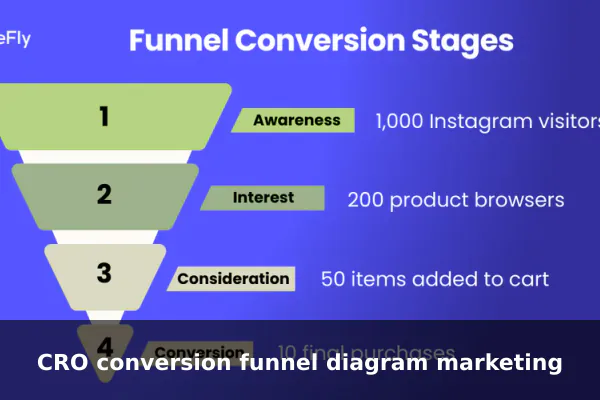
A conversion is any action a visitor takes that matters to your business. It might be signing up for a newsletter, filling in a contact form, adding a product to a cart, or completing a purchase. Conversion rate optimization is the disciplined practice of increasing the percentage of visitors who take that desired action.
The Conversion Rate Formula
The conversion rate formula is straightforward:
Conversion Rate = (Conversions ÷ Total Visitors) × 100
For example, if 500 people visit your landing page in a month and 25 of them fill in your contact form, your conversion rate is 5%. CRO aims to push that number higher — to 6%, 8%, or beyond — using research, testing, and targeted improvements. Even a one-point gain at meaningful traffic volumes can represent a significant revenue increase.
Why CRO Matters for Marketing Performance
Driving traffic costs money, whether through paid ads, SEO, or content creation. CRO helps you extract more value from the traffic you already have. Instead of doubling your ad budget to double your leads, you can often achieve the same result simply by improving your conversion rate.
Key benefits of investing in CRO include:
- Lower cost per acquisition across all channels
- Higher return on ad spend without increasing media budgets
- More leads and sales without additional traffic costs
- A better user experience that builds long-term trust and loyalty
- Data-driven insights that sharpen every other marketing decision you make
For any business investing in digital marketing, CRO is one of the highest-leverage activities available. Each improvement compounds over time and makes every other marketing channel — from email to paid search — more efficient and profitable.
How the CRO Process Works Step by Step
CRO is not guesswork. It follows a repeatable, evidence-based cycle you can apply to any page or element on your site. The goal is always to make a change, measure the result, and build on what you learn.
- Define your goal: Decide which conversion action matters most right now. Start with one clear, measurable goal — a form submission, a purchase, or a newsletter sign-up.
- Collect data: Use analytics tools to understand how visitors currently behave on that page. Where do they drop off? What do they click? How long do they stay?
- Identify friction points: Look for anything that confuses, frustrates, or slows down a visitor before they convert — unclear copy, long forms, slow load times, or a vague call to action.
- Form a hypothesis: Write a specific statement about what you will change and why. For example: Changing the CTA button color from grey to green will increase clicks because green creates stronger visual contrast on this page.
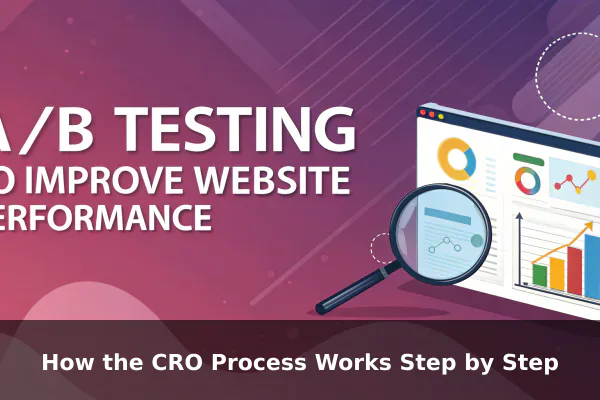
- Test the change: Run an A/B test where half your visitors see the original version and half see the updated one. Wait until you have enough data to draw statistically reliable conclusions.
- Analyze and repeat: Implement the winning version and begin the cycle again with the next element on your list.
Key Pages and Elements to Optimize First
Not every page deserves equal attention. Focus your early CRO efforts on the pages with the highest traffic volume and the most direct path to a conversion goal. Starting where the stakes are highest delivers the fastest returns.
High-Impact Areas to Prioritize
- Landing pages: These are the entry point for most paid traffic. Even a 1–2% lift in conversion rate can transform a campaign’s entire economics.
- Product pages: Clear descriptions, strong visuals, visible pricing, and review snippets all influence a buyer’s decision at the most critical moment.
- Lead capture forms: Long forms kill conversions. Remove every field that is not truly necessary to qualify or serve the lead.
- Calls to action (CTAs): The wording, color, size, and placement of your CTA button can have an outsized impact on whether a visitor acts or bounces.
- Checkout flows: Every extra step or confusing field in a checkout process loses customers at the final, most valuable stage of the journey.
Beginner-Friendly CRO Tactics That Often Work
You do not need a large budget or an engineering team to start improving conversions. These tactics are practical for beginners and have delivered proven results across many industries and business types.
- Clarify your value proposition: Your headline should explain what you offer and why it matters within three seconds of a visitor landing on the page. Vague headlines lose visitors instantly.
- Shorten your forms: Ask only for what is genuinely necessary. Research consistently shows that every extra field measurably reduces form completion rates.
- Add trust signals: Customer testimonials, security badges, money-back guarantees, and real case study references all reduce purchase anxiety and build credibility.
- Improve mobile usability: More than half of web traffic comes from mobile devices. If your site is awkward or slow on a phone, you are losing conversions every single day.
- Speed up your page load time: A one-second delay in load time can reduce conversions by 7%. Compress images, use a content delivery network, and remove unnecessary third-party scripts.
- Use scarcity and urgency authentically: Limited-time offers or low-stock notices can motivate action — but only when they are genuine. Fake urgency destroys trust.
Metrics and Tools Every Beginner Should Know
You cannot improve what you do not measure. These are the core metrics to track as you build your CRO practice, along with the tools that make tracking and testing accessible at any budget level.
Core CRO Metrics to Track
- Conversion rate: The percentage of visitors who complete your defined goal action.
- Bounce rate: The percentage of visitors who leave after viewing only one page, often signaling a mismatch between ad promise and page content.
- Exit rate: The percentage of visitors who leave from a specific page, regardless of how many pages they viewed before it.
- Average order value (AOV): For e-commerce, how much customers spend per transaction on average — a metric CRO can improve through upsells and clearer product presentation.
- Time on page: Longer engagement often signals that visitors find the content relevant and are seriously considering a conversion.
Essential CRO Tools for Beginners
- Google Analytics: Free, powerful, and essential for tracking traffic sources, user behavior flows, and goal completions.
- Microsoft Clarity or Hotjar: Heatmaps and session recordings that show exactly where visitors click, scroll, rage-click, and abandon the page.
- VWO, Convert.com, or AB Tasty: Dedicated A/B testing platforms with beginner-friendly visual editors that require no coding to set up simple tests.
- On-page surveys: Asking visitors a single question — such as What stopped you from completing your purchase today? — can surface friction points faster than any analytics tool.
Common CRO Mistakes to Avoid
Even experienced marketers stumble over these pitfalls. Knowing them upfront will save you from wasted tests, misleading conclusions, and months of effort pointed in the wrong direction.
- Testing with too little traffic: A/B tests need statistical significance to be valid. Running a test on 50 visitors produces data that is essentially meaningless for decision-making.
- Changing too many variables at once: If you redesign an entire page in one test, you cannot identify which specific change — headline, image, button, or layout — actually drove the result.
- Copying competitor tactics blindly: What converts for another business with a different audience and brand voice may not convert for yours. Always validate in your own context.
- Optimizing for clicks instead of outcomes: A brightly colored button might generate more clicks, but clicks alone are not the end goal. Track the actual downstream business outcome — a lead, a sale, a sign-up.
- Stopping after one successful test: CRO is an ongoing process with no finish line. Every optimized page creates the baseline for the next round of improvement.
A Simple 30-Day CRO Starter Plan
If you are new to conversion rate optimization, here is a realistic first-month action plan you can follow with limited time and resources. The goal is not perfection — it is momentum.
- Days 1–5: Set up Google Analytics and connect it to your key conversion pages. Define one primary goal to track consistently from day one.
- Days 6–10: Install a heatmap tool and watch recordings of real visitor sessions. Look for where users hesitate, get confused, or abandon the page entirely.
- Days 11–15: Audit your top three pages for CTA clarity, form length, mobile usability, and page load speed. Write down every friction point you spot.
- Days 16–20: Choose one specific element to test. Write a clear hypothesis. Set up your A/B test using the tool that fits your platform.
- Days 21–28: Let the test run without touching it. Resist the urge to stop early — incomplete data leads to wrong decisions.
- Days 29–30: Analyze the results with a focus on statistical significance. Implement the winning version and document what you learned so the next test starts smarter.
Conversion rate optimization is one of the most practical and high-return disciplines in digital marketing. Unlike tactics that demand constant new spending to sustain results, CRO multiplies the value of the traffic and attention you already have. Every test reveals something new about your audience, and every implemented improvement builds toward a site that works harder for your business around the clock.
The best time to start is right now, with whatever traffic and tools you have available. Choose one page, define one goal, run your first test, and let the data guide every decision from there.
