
Every business needs a reliable way to guide strangers into becoming loyal customers. The marketing funnel is the framework that makes that journey visible, measurable, and actionable. Rather than guessing why some campaigns convert and others fall flat, funnel thinking helps marketers understand exactly where prospects are in the decision process — and what they need at each step.
The concept is older than digital advertising, but it remains one of the most practical tools in a marketer’s toolkit. Whether you run a small e-commerce store or manage campaigns for an enterprise software company, the principles behind funnel stages apply equally to your audience, your content, and your conversion goals. This article explains each stage in plain terms, outlines the strategies that work at each level, and walks through real examples you can adapt today.
What the Marketing Funnel Really Means
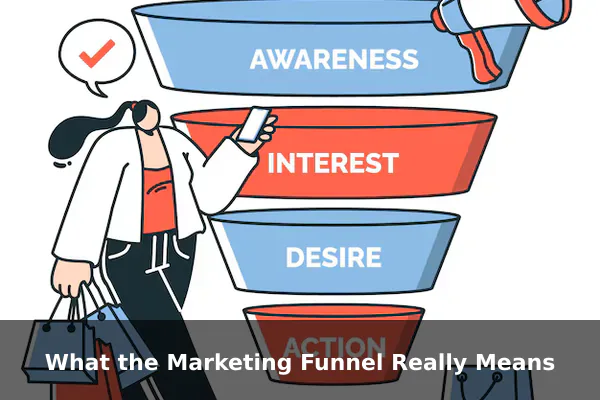
A marketing funnel is a model that maps the steps a potential customer takes from first hearing about a brand to making a purchase — and ideally, staying loyal beyond that. The funnel shape represents a simple truth: many people will discover your brand, fewer will seriously consider it, and an even smaller group will convert. That narrowing is not a failure; it is how buying decisions work in the real world.
Funnel thinking gives marketers a shared language for planning campaigns, aligning teams, and diagnosing weak spots. When a campaign drives clicks but no conversions, funnel analysis points to the consideration or conversion stage rather than the awareness stage. That specificity saves time and budget.
The Classic Funnel Model
The traditional model breaks the funnel into three broad levels:
- Top of funnel (TOFU): Awareness — reaching people who do not yet know your brand or product exists.
- Middle of funnel (MOFU): Consideration — engaging people who are actively researching options.
- Bottom of funnel (BOFU): Conversion — convincing ready-to-buy prospects to choose you over alternatives.
Modern frameworks add a fourth stage — Retention — to reflect the reality that keeping an existing customer is far less expensive than acquiring a new one.
Why Funnel Stages Matter for Messaging
A prospect in the awareness stage does not need a pricing page. A prospect in the conversion stage does not need a broad explainer about why your product category exists. Aligning the message to the stage is what separates effective marketing from noise. Each stage calls for different content types, different platforms, and different measures of success.
Awareness Stage: Getting the Right People to Notice You
The awareness stage is where the funnel begins. Your goal here is not to sell — it is to reach people who have a problem or desire relevant to your offer and make sure they know you exist. At this stage, prospects may not even realize they have a problem yet, or they may be starting to name it for the first time.
Top-of-Funnel Tactics That Work
Effective awareness tactics prioritize reach and relevance over immediate conversion. Common top-of-funnel approaches include:
- Organic search (SEO): Publishing blog posts and guides that answer broad questions your target audience is already searching for.
- Social media content: Short-form video, infographics, and shareable posts that introduce your brand to new audiences without asking for anything in return.
- Paid social ads: Broad targeting campaigns that place your content in front of people who match your ideal customer profile.
- PR and media coverage: Earned placements in publications, podcasts, or news outlets that give your brand credibility in front of new audiences.
- Partnerships and co-marketing: Collaborating with complementary brands to borrow each other’s reach and tap into established audiences.
Awareness Content Formats
The most effective awareness content educates, entertains, or surprises — it earns attention before asking for it. Examples include how-to guides, trend reports, short explainer videos, and thought leadership articles. A SaaS productivity tool, for instance, might publish a blog post titled Why remote teams lose two hours of productive time every week to surface in searches before ever mentioning the product name.
Consideration Stage: Turning Attention Into Interest
Once a prospect is aware of your brand, they enter the consideration stage. Here they are actively comparing options, reading reviews, watching demos, and asking whether your solution is the right fit for their specific situation. This is a high-intent moment — treat it as a conversation, not a pitch.
What Prospects Need at This Stage
During consideration, prospects need information that helps them make a confident, informed decision. They typically want to know:
- How your product or service works in practice
- How you compare to alternatives they are already aware of
- What measurable results other customers have achieved
- Whether the price and features match their specific needs and budget
Withholding this information to force a sales call is a common mistake that drives away self-directed buyers, especially in B2B and e-commerce contexts where independent research is the norm.
Strategies That Build Trust and Engagement
The most effective consideration-stage strategies provide genuine value while keeping your brand top of mind:
- Case studies and customer stories: Show how real customers solved a real problem using your product. Use numbers when possible — reduced onboarding time by 40% is more persuasive than improved efficiency.
- Comparison guides: Transparent comparisons that honestly address your strengths and weaknesses build more trust than one-sided promotional copy.
- Email nurture sequences: A series of helpful emails sent to leads who have opted in — each one answering a question they are likely to have at this stage.
- Retargeting ads: Showing relevant ads to people who visited your site but did not convert keeps your brand visible during their research phase.
- Webinars and live demos: Interactive formats that let prospects see your product in context and ask real questions before committing.
Conversion Stage: Helping Prospects Take Action
The conversion stage is where intent becomes action. A prospect arrives here ready to decide — your job is to remove friction, reinforce confidence, and make the next step as easy as possible. This stage includes purchases, free trial signups, consultation bookings, and any other defined conversion goal your business has set.
What Drives the Final Decision
At the conversion stage, small friction points can cause significant drop-off. Prospects are silently asking:
- Is this safe to buy? (security signals, guarantees, return policies)
- Am I making the right choice? (testimonials, ratings, social proof)
- Is this the right time? (limited offers, urgency cues, free trials)
- What happens next? (clear calls to action, transparent checkout flows)
Conversion Optimization Essentials
Strong conversion strategy focuses on four key elements:
- Clear, specific calls to action: Start your free 14-day trial performs better than Click here because it sets expectations and reduces uncertainty before the click.
- Social proof at the decision point: Placing customer reviews or trust badges directly on landing pages addresses objections at the exact moment they arise.
- Minimal friction in the process: Reducing form fields, enabling guest checkout, and offering multiple payment options removes barriers that cause abandonment.
- Targeted offers for hesitant prospects: Exit-intent popups with a discount or a free consultation offer can recover a meaningful percentage of visitors who are about to leave without converting.
Retention Stage: Keeping Customers Engaged After the First Conversion
Many marketing funnels stop at the sale. That is a costly mistake. The retention stage recognizes that a customer who bought once is your most likely future buyer, your best referral source, and a reliable source of ongoing revenue through repeat purchases or subscription renewals.
Why Retention Belongs in the Funnel
Research consistently shows that increasing customer retention rates by just 5% can increase profits by 25–95%, depending on the industry. Retained customers also spend more on average than new ones, require less persuasion, and generate word-of-mouth that feeds the very top of the funnel for free.
Retention Strategies That Reduce Churn
- Onboarding sequences: A structured post-purchase email series or in-product walkthrough that helps new customers experience value quickly reduces early churn and sets realistic expectations.
- Loyalty programs: Points, rewards, and exclusive member offers create habitual repurchase behavior and give customers a reason to return before they feel the urge to shop elsewhere.
- Proactive customer communication: Reaching out before a subscription renews, checking in after a purchase, or sending helpful usage tips shows customers that your relationship does not end at the sale.
- Win-back campaigns: Automated emails targeting customers who have not purchased in a defined period — with a personalized incentive or reminder of what they are missing — can reactivate a meaningful share of lapsed buyers.
A Simple Funnel Strategy Example From Start to Finish
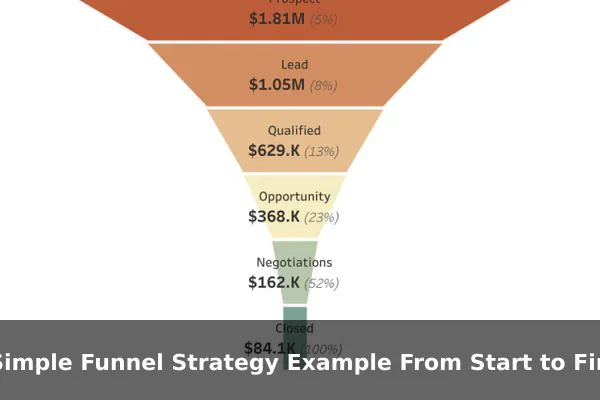
Here is a straightforward example of how funnel stages translate into a real campaign for a hypothetical online project management tool:
- Awareness: The team publishes an SEO article titled How to run more effective team standups and promotes it with a small paid social budget targeting startup founders and team leads. Goal: drive traffic from people who are not yet aware of the tool.
- Consideration: Visitors who spend time on the blog are retargeted with a short video ad showing how the tool works. An opt-in form at the bottom of the article offers a free team productivity checklist in exchange for an email address. Goal: capture contact details and start a nurture sequence.
- Conversion: Over the following week, the lead receives three emails — one sharing a customer case study, one comparing the tool to a spreadsheet-based workflow, and one offering a 14-day free trial with a one-click signup. Goal: move the lead from interested to active trialist.
- Retention: New trial users receive a five-email onboarding sequence that highlights one key feature per day. At day 10, a check-in email asks what is working and offers a 20% discount to upgrade before the trial ends. Goal: convert trialists to paying customers and reduce churn in the first 90 days.
Every stage has a clear goal, a defined channel, and a measurable outcome. That alignment is what makes funnel strategy actionable rather than theoretical.
Common Marketing Funnel Mistakes to Avoid
Even experienced marketers make predictable errors when applying funnel thinking. Recognizing these early saves significant wasted effort and budget:
- Sending the wrong content to the wrong stage: Pushing conversion-focused ads at cold audiences who have never heard of your brand wastes budget and creates a jarring first impression. Awareness content should educate first, sell later.
- Ignoring the handoff between stages: The gap between awareness and consideration, or between consideration and conversion, is where leads fall through. A clear next step — a content upgrade, a follow-up email, a retargeting ad — should bridge each transition deliberately.
- Treating the funnel as a straight line: Real buyer journeys are non-linear. Someone may discover you through a podcast, visit your website three times over two weeks, and then convert via a direct search. Nurture strategy should account for multi-touch behavior rather than assuming a clean top-to-bottom path.
- Skipping retention: Acquiring a new customer costs five to seven times more than retaining an existing one. Brands that invest heavily in the top of the funnel while neglecting post-purchase experience will see high churn offset their acquisition gains.
- Optimizing for vanity metrics: High impressions and low conversion rates, or high email opens and low link clicks, are signals that one stage is underperforming. Funnel health requires connecting each stage’s outputs to the next stage’s inputs.
How to Measure Success at Each Funnel Stage
Each funnel stage calls for different performance indicators. Tracking the right metrics at each level makes it possible to identify precisely where the funnel is leaking and where additional investment will have the most impact.
Awareness Metrics
- Organic search impressions and click-through rate
- Social reach, video views, and content shares
- Website sessions from new visitors
- Brand mention volume and share of voice
Consideration Metrics
- Time on site and pages per session
- Email list growth rate and open rate
- Content download and lead magnet conversion rate
- Demo requests and free trial signups
Conversion Metrics
- Landing page conversion rate
- Cost per acquisition (CPA)
- Lead-to-customer conversion rate
- Cart abandonment rate (for e-commerce)
Retention Metrics
- Customer retention rate and monthly churn rate
- Repeat purchase rate and average order frequency
- Customer lifetime value (CLV)
- Net Promoter Score (NPS)
Reviewing these numbers together — rather than in isolation — reveals how each stage feeds the next. A high awareness reach paired with poor lead generation points to a consideration-stage gap. Strong consideration engagement alongside low conversion often means a friction or trust issue at the bottom of the funnel. Following the numbers stage by stage is how smart marketers find and fix the real problem instead of optimizing the wrong lever.
The marketing funnel is not a rigid rulebook — it is a thinking tool that helps you ask better questions, allocate resources more deliberately, and measure what actually matters. Whether you are building a funnel from scratch or diagnosing a campaign that is underperforming, mapping your strategy to these stages gives every tactic a clear purpose and every metric a meaningful context. Start with awareness, guide prospects through consideration, make conversion effortless, and invest in the customers you have already won — that is the full loop that drives sustainable, compounding growth.
