
If you have ever noticed that websites seem to show you ads for products you were just researching, the technology behind that experience is often programmatic advertising. It powers a massive share of the digital ad industry, yet most beginners have never had it explained in plain language. This guide changes that.
Many people assume programmatic advertising is just another way of saying Google Ads or social media campaigns. It is actually something broader and more automated. Understanding how it works will help you make smarter marketing decisions and avoid wasting budget on campaigns you do not fully control.
What Programmatic Advertising Actually Means
At its core, programmatic advertising is the automated buying and selling of digital ad space using software and real-time data. Before this technology existed, advertisers had to contact publishers directly, negotiate prices, and wait days for an ad to go live. That process was slow, expensive, and hard to scale.
Today, software handles the entire transaction in milliseconds. An advertiser sets rules — who they want to reach, how much they are willing to pay, and what the ad looks like. The system does the rest, finding matching audiences across thousands of websites and apps without any human negotiation involved.
How the Process Works Behind the Scenes
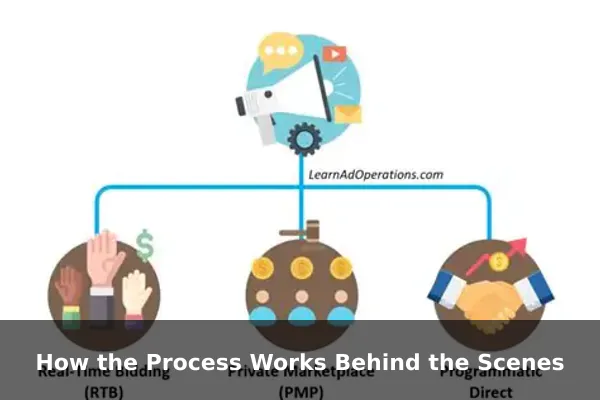
The process happens so fast it is nearly invisible. Here is a simplified step-by-step view of what occurs each time a user visits a webpage with ad space available:
- A user lands on a webpage that has an open ad slot.
- The publisher’s system sends a signal to an ad exchange, announcing that an impression is up for auction.
- Multiple advertisers receive the signal and their systems automatically bid for that impression in a process called real-time bidding (RTB).
- The highest bidder wins, and their ad is delivered to the user within roughly 100 milliseconds — faster than a blink.
- The advertiser pays the winning bid, and the user sees the ad without ever knowing an auction occurred.
The auction completes before the page even finishes loading. This is why ads can feel so relevant to your recent searches — the system uses audience data to match ads to specific users in real time.
The Main Players You Should Know
Programmatic advertising involves several key participants working together. Understanding each one makes the whole system much easier to follow.
Demand-Side Platform (DSP)
A DSP is the tool advertisers use to manage their campaigns. It lets them set targeting rules, daily budgets, and bidding strategies. Examples include The Trade Desk, Google Display and Video 360, and Amazon DSP.
Supply-Side Platform (SSP)
An SSP is used by publishers — the websites and apps selling their available ad space. The SSP connects their inventory to ad exchanges so buyers can bid. Google Ad Manager is a well-known example.
Ad Exchange
The ad exchange is the digital marketplace where buying and selling happen. It connects DSPs and SSPs in real time and runs the auctions that decide which ad appears in which slot.
Data Providers
These companies supply the audience data that makes targeting possible. They collect browsing history, demographic details, and behavioral signals that help advertisers find the right users across the web.
Where Programmatic Ads Can Appear
One of the biggest advantages of programmatic advertising is how many channels it covers. It is not limited to banner ads on news websites. Common environments include:
- Display ads: Banner and image ads on websites and mobile apps — the most familiar format.
- Video ads: Pre-roll and mid-roll placements on websites and streaming platforms.
- Mobile apps: Ads served inside smartphone apps, from games to weather tools.
- Connected TV (CTV): Ads shown on smart TVs and streaming services like Hulu or Peacock.
- Digital audio: Ads inserted into podcasts and music platforms like Spotify.
- Digital out-of-home (DOOH): Programmatically served ads on digital billboards and public screens.
This reach means a single campaign can follow a user from their morning podcast to their evening streaming session, keeping messaging consistent throughout the day.
Why Marketers Use Programmatic Advertising
Programmatic advertising has grown rapidly because it solves problems that manual ad buying could not. Here are the core reasons marketers rely on it:
Precise Audience Targeting
Instead of buying space on one website and hoping the right visitors show up, programmatic lets you target by age, location, interests, and browsing behavior. You reach your audience wherever they go online, not just where you placed an ad.
Efficiency and Scale
A single campaign can reach millions of users across thousands of websites without a team managing individual placements. The software handles the work at a scale no manual process could match.
Real-Time Optimization
Performance data updates constantly. If one audience segment converts better than another, the system can automatically shift spending toward it — improving results without manual intervention.
The Downsides and Risks Beginners Should Understand
Programmatic advertising is powerful, but it carries real risks that every beginner should know before spending money.
- Ad fraud: Bots can simulate fake page views and clicks, causing advertisers to pay for impressions no real person ever saw. It costs the industry billions each year.
- Brand safety: Because ads are placed automatically, they can appear next to content that conflicts with a brand’s image. Block lists and brand safety tools help reduce but do not eliminate this risk.
- Hidden fees: Every layer of the programmatic stack takes a cut. A significant portion of your budget may go to platform fees before any ad ever reaches a real user.
- Privacy regulations: Laws like GDPR and CCPA restrict how user data can be collected and used for targeting. Non-compliant campaigns can result in fines and reputational damage.
Programmatic Advertising vs Traditional Digital Ad Buying
Comparing both approaches shows when automation helps and when direct deals still make sense.
- Direct buying: Advertiser contacts a publisher, negotiates a fixed price, and secures specific placements. Slower and more manual, but offers precise control over where ads appear and next to what content.
- Programmatic buying: Automated, data-driven, and scalable. Less control over exact placements but far greater efficiency and audience precision across a massive range of inventory.
Neither is always better. High-value publishers with niche audiences may still be worth a direct deal. For reach-oriented campaigns, programmatic almost always wins on speed, targeting, and cost efficiency.
A Simple Beginner Checklist Before You Start

If you are ready to explore programmatic advertising, work through this checklist before committing any budget:
- Define your goal. Are you building awareness, driving traffic, or generating sales? Your goal shapes every campaign decision that follows.
- Identify your audience. Get specific about who you want to reach — demographics, interests, and online behaviors.
- Set a realistic budget. Small tests are fine, but you need enough data to optimize. A few hundred dollars per month is a reasonable starting point.
- Prepare your creatives. Have properly sized banner ads, video files, or other formats ready before launch.
- Install conversion tracking. Set up the necessary pixels on your website so you can measure what happens after someone clicks your ad.
- Choose a DSP or managed service. Beginners often start with a managed service where an agency handles the setup. Self-serve platforms are a natural next step as you learn.
- Plan to test and learn. Treat your first campaign as a learning exercise. Review the data, adjust targeting, refresh creatives, and improve with each iteration.
Programmatic advertising can feel overwhelming at first, but the fundamentals are straightforward once you see the full picture. It is automated, data-driven ad buying that connects advertisers with specific audiences at scale and speed no manual process can replicate. Start with clear goals, respect the risks, and approach your early campaigns as experiments. The learning curve is real, but so is the potential to reach exactly the right people at exactly the right moment.
