

Most marketing advice today focuses on attracting customers to you — creating content, optimizing for search, building a social presence. But for many businesses, waiting for potential buyers to find them is simply not fast enough. That is where outbound marketing comes in. It flips the model entirely: instead of waiting, you reach out first.
Outbound marketing is one of the oldest and most direct forms of promotion, and it remains highly effective when applied correctly. Whether you are a startup trying to land your first clients or an established company entering a new market, understanding outbound marketing — what it is, how it works, and how it compares to inbound — gives you a powerful tool in your overall strategy. This article covers everything you need to evaluate and apply outbound tactics with confidence.
What Outbound Marketing Means
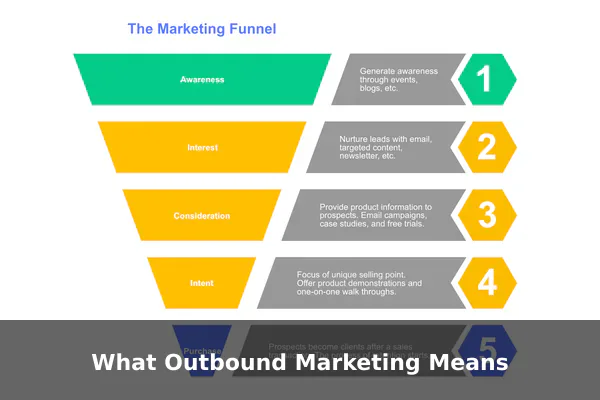
Outbound marketing refers to any marketing method where a business initiates contact with a potential customer. Instead of creating content and waiting for people to discover it, outbound marketing pushes a message directly to a target audience — whether or not those people have expressed prior interest.
The term outbound reflects the direction of communication: messages go out from the brand to the audience. This is in contrast to inbound marketing, where the brand creates value — through blog posts, videos, or guides — that draws customers in organically over time.
Outbound marketing is sometimes called push marketing because the business pushes its message to consumers. Common outbound channels include television commercials, cold calls, display advertising, direct mail, and trade show appearances. The goal is the same regardless of channel: get in front of your target audience quickly and deliver a compelling reason to take action.
The Core Philosophy Behind Outbound
Outbound marketing operates on a simple premise: if you identify the right audience and deliver the right message at the right time, you can generate leads and sales without waiting for organic discovery. It is a proactive strategy built on volume, precise targeting, and clear persuasion. This approach works especially well when a business needs results quickly, when the product solves a problem the audience may not yet be searching for, or when the sales cycle requires direct engagement rather than passive nurturing.
How Outbound Marketing Works
The outbound marketing process follows a clear sequence, though specific steps vary by channel. Understanding the general flow helps you plan and execute campaigns with greater control.
Define Your Target Audience
Every effective outbound campaign begins with a clear picture of who you are trying to reach. This includes demographic data such as age, location, and job title; behavioral data such as purchase history and company size; and psychographic details such as goals and buying triggers. The sharper your targeting, the more efficient and cost-effective your outreach becomes.
Build or Source a Contact List
Outbound marketing requires a list of people or organizations to contact. This might be a list of phone numbers, email addresses, physical mailing addresses, or audience segments within an ad platform. Businesses can build lists from existing data, gather leads at events, purchase contact lists from data providers, or use tools like LinkedIn Sales Navigator to identify high-fit prospects.
Craft and Deliver Your Message
The message must be relevant, concise, and compelling. A cold email that clearly addresses a recipient’s specific challenge will always outperform a generic template. Strong outbound messaging focuses on the prospect’s problem and positions the product or service as the logical solution — not simply a list of features. After delivery, most campaigns require multiple follow-up touches because a single exposure rarely converts a prospect on its own.
Measure and Optimize
After delivery, track your results. Key metrics include response rate, click-through rate, cost per lead, cost per acquisition, and return on investment. Use this data to refine targeting, messaging, timing, and channel mix for every future campaign. Outbound marketing only improves when you treat every campaign as a learning opportunity.
Common Outbound Marketing Examples
Outbound marketing takes many forms across both traditional and digital channels. Here are the most widely used examples in practice.
Cold Email Outreach
Cold email involves sending targeted messages to people who have not previously interacted with your business. It is especially common in B2B sales, where sales development representatives reach out to prospects to schedule discovery calls or product demos. When personalized and well-timed, cold email delivers strong results at relatively low cost, making it one of the most accessible outbound channels for small and mid-sized businesses.
Cold Calling
Cold calling remains a staple in B2B industries, financial services, real estate, and insurance. A sales representative calls a prospect directly to introduce the product and qualify their interest. While response rates have declined due to call screening and spam filtering, cold calling still works well in high-value B2B environments where personal conversations drive complex purchase decisions.
Direct Mail
Direct mail includes physical materials sent to a mailing list: postcards, brochures, catalogs, or personalized sales letters. It has seen a resurgence in recent years as digital inboxes became saturated. Physical mail stands out and can achieve strong response rates when paired with a relevant offer and a clear call to action — particularly for local service businesses and retail brands.
Paid Display and Search Ads
Digital advertising — including banner ads, Google Display Network placements, and YouTube pre-roll ads — functions as outbound marketing because the message is shown to users who did not specifically request it. These ads interrupt the browsing experience to deliver a brand message, following the classic push model of outbound communication. Paid search ads targeting broad or competitor keywords also fall into this category when they reach users who were not already aware of the brand.
Television and Radio Advertising
TV and radio commercials are the original outbound channels. They reach large audiences quickly and build brand awareness at scale. While expensive relative to digital alternatives, they are particularly effective for mass-market consumer products, local service businesses, and brands building top-of-mind awareness across a specific region or demographic.
Trade Shows and Industry Events
Exhibiting at trade shows, conferences, or expos is a powerful outbound tactic for B2B companies. Your brand actively seeks out qualified prospects in a concentrated setting, engages in face-to-face conversation, and collects leads in person. This approach is especially effective in niche markets where a small number of decision-makers attend the same key events each year.
SMS and Text Message Campaigns
Text message campaigns send promotional offers, appointment reminders, or time-sensitive deals directly to targeted mobile users. SMS consistently achieves some of the highest open rates of any marketing channel — often exceeding 90% — making it a high-impact outbound tool for retail, hospitality, healthcare, and service businesses with strong existing customer relationships.
Outbound vs Inbound Marketing: Key Differences
The contrast between outbound and inbound marketing is one of the most important distinctions in modern strategy. Understanding both sides helps you design a smarter, more balanced approach.
- Initiation: Outbound starts with the brand reaching out. Inbound starts with the customer finding the brand.
- Audience intent: Outbound contacts people who may not be actively searching for a solution. Inbound attracts people who are already looking for answers.
- Channel type: Outbound uses push channels — ads, cold outreach, direct mail. Inbound uses pull channels — SEO content, organic social, webinars, and guides.
- Speed to results: Outbound can produce leads within days of launch. Inbound typically takes months to build meaningful organic traffic and trust.
- Cost structure: Outbound often carries a higher upfront cost per lead, especially on traditional channels. Inbound costs shift toward content creation and SEO, with lower long-term cost per lead once established.
- Lead quality: Inbound leads are often warmer because the prospect came looking for help. Outbound lead quality varies depending on how accurately the audience was targeted.
- Scalability: Outbound scales by increasing budget and list size. Inbound scales through compounding content authority and search rankings over time.
Neither approach is universally better. The most effective marketing strategies blend both: outbound to generate fast visibility and leads, inbound to build sustainable long-term growth.
Main Benefits of Outbound Marketing
Outbound marketing continues to be a core part of many growth strategies for clear reasons. Here are the situations where it performs best.
Fast, Controllable Lead Flow
Outbound campaigns can start generating leads almost immediately after launch. Run a paid ad today and receive clicks within hours. Send cold emails and book meetings within days. This speed is critical for new product launches, seasonal promotions, and businesses that cannot afford to wait months for inorganic traffic to grow. Equally important, outbound gives you control over volume: increase your ad spend or expand your contact list, and lead flow increases proportionally — making revenue forecasting more predictable.
Precise Account and Audience Targeting
Modern outbound tools allow businesses to target specific companies, job roles, industries, or geographic areas with remarkable precision. Account-based marketing (ABM) relies heavily on outbound tactics to reach decision-makers at high-value accounts with personalized, relevant messages — an approach that is simply not possible through purely inbound methods that wait for self-selection.
Broad Awareness at Scale
For brand awareness at speed, nothing matches traditional outbound channels like TV or large-scale digital advertising. When you need to reach millions of people with a consistent message — during a product launch, a market entry, or a rebranding — outbound channels deliver the reach that inbound strategies cannot match in the short term.
Limitations and Risks to Watch
Outbound marketing comes with real challenges. Understanding these limitations helps you design campaigns that avoid the most common and costly mistakes.
Interruption Fatigue
People encounter thousands of marketing messages every day. Many consumers now actively avoid advertising — using ad blockers, skipping commercials, screening unfamiliar calls, and deleting unsolicited emails without reading them. This interruption fatigue means your outbound messages compete for attention in an increasingly resistant environment. Standing out requires strong creative, precise targeting, and a genuinely relevant offer.
Higher Cost Per Lead Without Good Targeting
When targeting is poor or messaging is generic, outbound campaigns become expensive fast. A cold email campaign with a 0.5% response rate or a display ad with low click-through and poor landing page conversion quickly inflates acquisition costs. Continuous testing and segmentation are necessary to keep outbound economics healthy.
Compliance and Legal Requirements
Outbound marketing is subject to significant regulation. Cold email must comply with laws such as the CAN-SPAM Act in the United States or GDPR in the European Union. Cold calling is governed by Do Not Call registries in many countries. SMS marketing requires explicit opt-in consent in most jurisdictions. Failing to comply can result in large fines and lasting reputational damage, so legal compliance must be built into every campaign from the start.
When to Use Outbound Marketing
Outbound is not the right tool for every situation, but there are clear scenarios where it is the best choice or a critical complement to inbound efforts.
- B2B prospecting with a defined ideal customer profile: If you know exactly what your ideal client looks like — industry, company size, decision-maker role — outbound lets you engage those people directly rather than waiting for them to find you.
- Launching a new product or service: Outbound generates immediate visibility for something new. Paid ads and cold outreach drive early adopters and validate product-market fit faster than waiting for organic discovery.
- Entering a new market or geography: When expanding into a new segment where you have no brand recognition or search authority, outbound builds pipeline before inbound assets have time to develop.
- Promoting time-sensitive offers: Flash sales, event registrations, and limited-time deals need immediate reach. Paid ads, SMS, and email broadcasts are far faster than SEO or content marketing for driving urgent action.
- Re-engaging cold or dormant leads: A targeted outbound sequence can restart conversations with prospects who went quiet and move them back into the funnel before they choose a competitor.
How to Make Outbound Campaigns More Effective
Outbound marketing only delivers strong results when executed with discipline. These practices consistently separate high-performing campaigns from wasted budget.
Sharpen Your Targeting
Poor targeting is the most common reason outbound campaigns underperform. Define your audience as specifically as possible — by role, industry, company size, geographic area, or behavioral signals. The more relevant your list, the higher your response rates and the lower your cost per lead. Broad targeting is expensive; tight targeting is efficient.
Personalize Every Message
Generic outreach gets ignored. Even simple personalization — mentioning a prospect’s company name, referencing a specific challenge their industry faces, or citing a recent company announcement — meaningfully improves open and response rates. Use the data available to you to make every contact feel relevant and specific, not mass-produced.
Test, Follow Up, and Iterate
Run A/B tests on subject lines, ad creative, call-to-action phrasing, and offer types. Build disciplined follow-up sequences because most conversions in outbound happen after the third or fourth touch, not the first. Track the metrics that matter — cost per qualified lead, meetings booked per 100 contacts, pipeline generated per channel — and use that data to refine every subsequent campaign.
Choosing the Right Mix for Your Business
Very few successful businesses rely exclusively on outbound or inbound marketing. The most effective growth strategies integrate both, with the balance depending on company stage, budget, sales cycle length, and target audience characteristics.
Early-stage startups often lean on outbound for speed — cold outreach and paid ads generate pipeline while content and SEO assets are still being built. Established businesses with strong organic presence may use outbound to accelerate growth in new segments or keep pipeline full during periods when inbound lead volume dips.
A practical framework for finding your balance:
- Time horizon: Need results in 30 days? Lean outbound. Building a 12-month growth engine? Invest in inbound alongside it.
- Budget: Outbound costs money up front but delivers faster. Inbound costs time and content investment but compounds over the long term.
- Sales cycle: Long, consultative B2B sales cycles benefit from outbound for initial engagement and inbound content for nurturing through the decision process.
- Audience awareness: If your ideal customers do not yet search for what you offer, outbound reaches them before they know to look.
- Market saturation: In crowded search markets, outbound can cut through the content competition that makes inbound ranking increasingly difficult.
The goal is not to pick a side between outbound and inbound. The goal is a consistent, reliable pipeline of qualified leads — and outbound marketing, used thoughtfully, is one of the most direct ways to build it. Track your results, refine your approach, and let data guide where your next marketing dollar should go.
