

Lead scoring is one of those marketing concepts that sounds technical at first but, once understood, changes how you think about every prospect in your pipeline. At its core, lead scoring is a method for ranking leads based on how likely they are to become paying customers. Instead of treating a casual blog reader the same as someone who just requested a demo, lead scoring helps you see the difference — and act on it.
The problem many marketing and sales teams face is straightforward: they generate plenty of leads, but not every lead deserves the same level of attention. Without a system to separate high-intent prospects from those who are simply browsing, sales reps waste time chasing cold contacts while warm leads go quiet. Lead scoring solves this by giving every contact a number — and that number drives smarter decisions.
This guide explains how lead scoring works, why it matters, and gives you clear, beginner-friendly examples you can adapt for your own business.
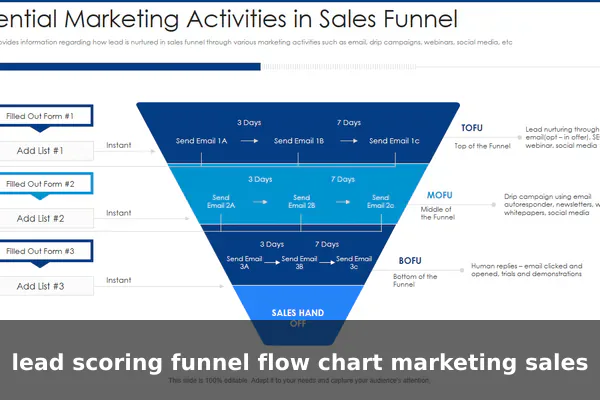
What Lead Scoring Means in Practice
Lead scoring is the process of assigning a numerical value to each lead based on specific criteria. These criteria typically fall into two buckets: who they are and what they do.
A lead who matches your ideal customer profile and has visited your pricing page three times scores much higher than a lead with a mismatched job title who only downloaded a free guide. The higher the score, the closer that lead is to being sales-ready.
For example, imagine a software company. A lead who is a marketing manager at a mid-sized e-commerce business, has opened four emails, attended a webinar, and clicked the Request a Demo button might score 85 out of 100. A student who signed up for a newsletter scores 10. The difference is obvious — and the scoring model makes it automatic.
Why Businesses Use Lead Scoring
Lead scoring delivers practical benefits that make a measurable difference in how marketing and sales teams operate every day.
- Better prioritization: Sales reps focus on leads most likely to close, not whoever happens to be at the top of the list.
- Faster follow-up: When a lead crosses a threshold score, it can trigger automatic alerts or a handoff to sales without delay.
- Stronger team alignment: Marketing and sales agree on what a qualified lead looks like, reducing friction and blame between departments.
- Higher conversion rates: Reps spend their energy on warm leads, improving the rate at which prospects become paying customers.
- Less wasted effort: Fewer resources go toward nurturing leads who were never a real fit in the first place.
For businesses managing large volumes of inbound leads, scoring is not optional — it becomes a meaningful competitive advantage.
How a Basic Lead Scoring Model Works
A lead scoring model combines multiple criteria, each assigned positive or negative point values. Most models use a scale of 0 to 100, though any consistent range works as long as it is applied uniformly across all leads.
Demographic and Firmographic Signals
These signals describe who the lead is:
- Job title: A decision-maker or budget holder gets a high score. An intern or student gets low or zero points.
- Company size: Matches your target market? Add points. Too small or too large? Subtract or stay neutral.
- Industry: A relevant vertical adds points. An unrelated industry may subtract from the total.
- Location: Geographic fit matters for local businesses or region-specific products and services.
Behavioral Signals
These signals describe what the lead has done on your site and with your content:
- Pricing page visit: High positive signal — shows clear commercial intent.
- Demo request or free trial signup: Very high score — strong indication of buying interest.
- Email open and click: Moderate positive signal — shows active engagement with your brand.
- Webinar attendance: Positive signal — they invested real time to learn from you.
- Unsubscribed from email: Negative signal — reduce or reset the score.
- No site activity in 90 days: Negative signal — lead has gone cold.
The model rewards actions and attributes that correlate with purchasing, and penalizes signals that suggest low intent or poor fit for your offer.
Easy-to-Follow Lead Scoring Examples
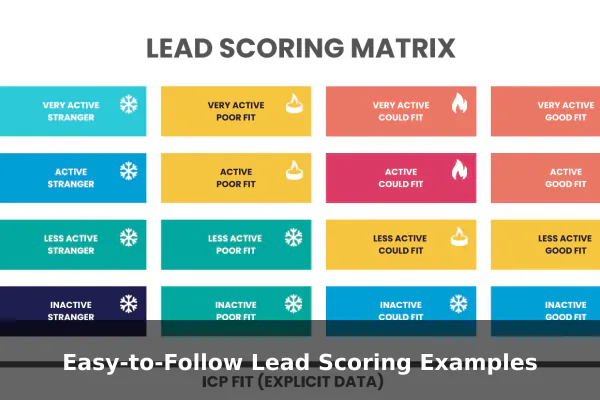
Here is a simple scoring table a B2B software company might use to rank its incoming leads:
Positive Scores
- Requested a demo: +30 points
- Visited the pricing page: +20 points
- Attended a live webinar: +15 points
- Job title is VP or Director: +15 points
- Opened 3 or more emails in a campaign: +10 points
- Company size between 50 and 500 employees: +10 points
- Downloaded a case study or product guide: +8 points
Negative Scores
- Unsubscribed from email list: −20 points
- Job title is student or intern: −15 points
- Company size under 5 employees: −10 points
- No website activity in 90 days: −10 points
Using this model, a VP of Marketing at a 200-person company who watched a webinar, visited the pricing page, and requested a demo would score over 90 — a clear signal for immediate sales follow-up. A student who only downloaded a free ebook scores near zero — better suited to a long-term nurture sequence than a direct sales call.
Steps to Build Your First Lead Scoring System
Starting a lead scoring model does not require expensive software or a large team. Here is a practical process to get started:
- Define your ideal customer: Look at your best existing customers. What job title, industry, and company size do they share?
- List your scoring criteria: Choose five to ten demographic and behavioral factors that matter most for your business.
- Assign point values: Weight each factor by how strongly it predicts buying intent. High-intent actions earn more points.
- Set a qualification threshold: Decide what score moves a lead into sales. A common starting point is 50 or 60 out of 100.
- Test and review: After 60 to 90 days, compare scored leads against actual conversion data and adjust weights that proved inaccurate.
Many CRM and marketing automation platforms — including HubSpot, Salesforce, and ActiveCampaign — have built-in lead scoring features that make this process easier to manage as your lead volume grows.
Common Lead Scoring Mistakes to Avoid
Even a well-designed model can underperform if basic mistakes go unchecked. Watch out for these:
- Overcomplicating the model: Dozens of criteria make the system hard to manage. Start simple and add complexity only when the data supports it.
- Ignoring negative signals: Scoring only positive actions inflates scores and sends unqualified leads to your sales team.
- Rewarding vanity actions too highly: A social media like or a homepage visit does not indicate buying intent. Keep scores proportional to commercial value.
- Never updating the model: Buyer behavior changes. A model built two years ago may no longer reflect what actually drives conversions today.
- Excluding the sales team: If sales reps do not trust or understand the model, they will ignore the scores entirely. Build it collaboratively from the start.
How to Measure Whether Lead Scoring Is Working
Once your model is live, track these key metrics to judge its effectiveness:
- Sales acceptance rate: What percentage of scored leads does the sales team accept as truly qualified? A low rate signals the threshold may be too low.
- Lead-to-customer conversion rate: Are high-scoring leads converting at a meaningfully higher rate than low-scoring ones? This directly validates the model.
- Speed of follow-up: Is the sales team reaching hot leads faster now than before scoring was in place?
- Revenue quality: Compare average deal size and close rate for leads that came through the scoring model versus those that did not.
Review these numbers monthly at first, then quarterly once the model has stabilized and your team has confidence in it.
When to Keep It Simple and When to Refine It
For small teams or businesses with low lead volume, a simple spreadsheet-based scoring model is often enough to start. Track five to seven criteria, score leads manually, and review the list weekly. There is no need to over-engineer the system before the basics are working.
As lead volume grows, automation becomes essential. Marketing automation platforms can score leads in real time, trigger sales alerts at threshold scores, and sync data directly with your CRM without any manual effort.
Predictive lead scoring powered by machine learning becomes valuable only when you have thousands of leads and need the model to adapt automatically to patterns in historical data. For most small and mid-sized businesses, a well-maintained rule-based model delivers strong results without that complexity.
Lead scoring is not a one-time setup — it is a living system that improves as you learn what actually drives buying decisions in your market. Start simple, review it regularly, and let conversion data guide how you refine it over time. Even a basic model can transform how efficiently your pipeline moves from first contact to closed customer.
