
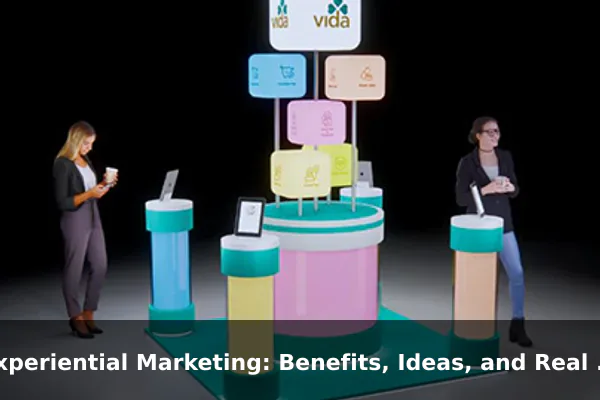
Most advertising asks people to watch, read, or scroll. Experiential marketing asks them to participate. Instead of delivering a message at a distance, brands create real-world moments that people can touch, taste, explore, and share. That shift from passive viewing to active involvement is what makes experiential marketing fundamentally different — and for many brands, far more effective at building genuine loyalty.
The format goes by several names: live marketing, engagement marketing, or participation marketing. But the goal stays the same — make customers feel something by placing them directly inside the brand story. When the experience lands well, people do not just remember the brand. They talk about it, post about it, and come back for more. This article covers what experiential marketing actually is, why brands invest in it, what makes a campaign succeed, practical ideas to adapt, real examples worth studying, and how to measure results without guessing.
What Experiential Marketing Means in Practice
Experiential marketing is a strategy that puts customers at the center of a live, interactive brand moment. Rather than telling an audience what a brand offers, it creates a situation where people discover value themselves through direct experience. The emphasis is always on participation. A pop-up installation where visitors interact with products, a branded workshop where guests learn something genuinely useful, a community event built around shared values — these are all experiential marketing in action. The common thread is that the brand steps out of the ad space and into real life.
How It Differs from Event Marketing and Sponsorships
Event marketing typically means organizing or attending events to promote a product — a launch party, a trade show booth, or a conference slot. Sponsorships place a brand logo on an event someone else created. Both have value, but neither is the same as experiential marketing. Experiential campaigns go deeper. The goal is not just presence or awareness — it is creating a meaningful interaction that changes how people feel about the brand. The experience itself is the message, not merely the backdrop for one.
Why Brands Invest in Experiential Campaigns
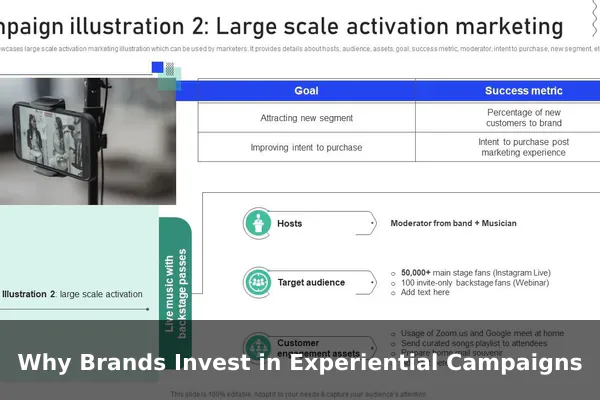
The investment in experiential marketing keeps growing because the returns are real and often difficult to replicate through digital ads or traditional media alone. Here are the core reasons brands keep returning to it:
- Higher engagement: People are active participants, not passive viewers. That active role deepens attention and creates stronger memory encoding compared to an ad impression.
- Emotional connection: Positive experiences create positive associations. When a brand gives someone a genuinely enjoyable moment, that feeling attaches to the brand long after the event ends.
- Word of mouth and social sharing: Memorable experiences get shared. Attendees post photos, tag the brand, and tell friends — extending campaign reach far beyond the event footprint at zero additional media cost.
- Brand recall: People consistently remember brands they have interacted with far longer than brands they have only seen in ads. The physical and emotional engagement creates durable memory.
- Customer loyalty: Experiences that feel personal and valuable build relationships, not just awareness. Customers who feel a genuine connection are more likely to return and recommend.
- Lead generation: Live interactions allow brands to collect data, demonstrate value, and start real conversations that feed directly into the sales funnel.
The Psychology Behind Why It Works
When people experience something rather than simply hear about it, more parts of the brain activate simultaneously. Emotion, memory, and decision-making overlap. That neurological combination is why a well-executed brand experience can accomplish in a single afternoon what months of display advertising sometimes cannot. Brands that understand this invest in creating moments rather than messages.
Core Elements of an Effective Brand Experience
Not every live event qualifies as strong experiential marketing. The difference between a campaign that moves the needle and one that falls flat usually comes down to a handful of non-negotiable elements.
Clear Connection to Brand Purpose
The experience should feel like a natural extension of what the brand stands for, not a random event with a logo placed on it. If the brand’s core promise is about creativity, the experience should spark creativity in participants. If it centers on health, the experience should feel energizing and aligned with that value. Disconnect between the brand story and the activation leaves people confused rather than impressed.
Audience Fit
The format, setting, and tone must match the specific audience. A high-energy pop-up in an urban center works for younger audiences seeking novelty. A curated workshop in a boutique venue works for a professional demographic that values learning. Getting the audience wrong means even the most creative concept lands on people who have no interest in engaging with it.
Interactivity and Sensory Involvement
Passive watching is not enough. People should be able to touch, taste, build, choose, or contribute. The more senses involved, the stronger the resulting memory. Give people something to do, not just something to look at. Hands-on involvement signals that the brand respects the audience’s time by delivering genuine value rather than another sales pitch.
Built-in Shareability
Design the experience with social sharing in mind — a visually striking backdrop, a unique product reveal, a moment worth capturing. This is not about engineering gimmicks. It is about creating something interesting enough that people naturally want to document and share it. User-generated content extends the campaign’s life well beyond the event itself.
A Defined Call to Action
What should attendees do next? Sign up, follow, buy, download, or book a consultation? Every experience needs a clear next step that moves the relationship forward. Without one, even the most successful activation becomes a one-time event with no lasting commercial impact. The experience opens the door — the call to action walks people through it.
Experiential Marketing Ideas Brands Can Adapt
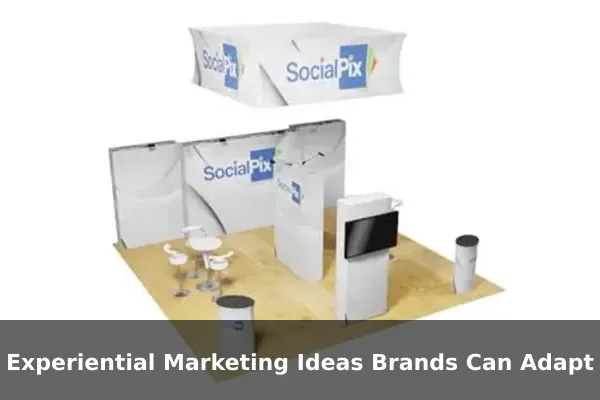
The formats for experiential campaigns range widely. Below are practical ideas that brands of different sizes and budgets can adapt to their specific goals.
- Pop-up experiences: Temporary branded spaces in high-traffic areas invite people to interact with products or services outside of traditional retail settings. These work especially well for new product launches or entering a new geographic market.
- Product sampling and live demos: Letting potential customers try a product firsthand removes the uncertainty that holds many buyers back. A live demonstration adds context and credibility that an image or written description cannot replicate.
- Immersive installations: Multi-sensory environments that place the brand story around the visitor. These range from art-adjacent pop-ups in gallery spaces to elaborate themed experiences at festivals and public events.
- Branded workshops and classes: Teaching something genuinely useful — a cooking class for a food brand, a photography workshop for a camera company, a productivity session for a software brand — builds positive associations while demonstrating real expertise.
- Community activations: Events built around local interests or causes that align with brand values. These build goodwill and authentic connection beyond a transactional buyer relationship.
- Hybrid online-offline experiences: Extending a live event into digital spaces through live streaming, augmented reality, interactive polls, or online participation challenges. This reaches audiences who cannot attend in person and amplifies overall campaign reach.
- Co-creation events: Inviting customers to help design, vote on, or contribute to a product or campaign element. This builds a sense of ownership and investment among participants that translates into long-term advocacy.
Scaling for Smaller Budgets
Experiential marketing is not reserved for global brands with unlimited resources. A local bakery running a free decorating workshop, a startup hosting an intimate user roundtable, or a clothing brand organizing a neighborhood style swap — these are all experiential campaigns at a realistic scale. What matters is the quality of the interaction and its relevance to the audience, not the size of the production budget.
Real Examples and What Made Them Work
Looking at actual campaigns shows how these principles translate into practice and what specific choices drove results.
Red Bull Stratos
Red Bull sponsored Felix Baumgartner’s record-breaking freefall from the stratosphere, live-streamed to millions worldwide. This was not a product launch — it was a global spectacle that reinforced the brand’s core positioning with maximum intensity. The takeaway: when the experience embodies the brand’s message at an extraordinary scale, the result is impossible to ignore and nearly impossible to forget.
IKEA’s Fan Sleepover
IKEA invited Facebook fans to spend a night inside one of its stores, sleeping in actual display bedrooms and enjoying in-store spa treatments. The campaign generated significant press coverage and organic social content from attendees. The takeaway: turning customers into insiders — giving them access and experiences no one else receives — creates a sense of exclusivity and personal affection that traditional advertising rarely achieves.
Refinery29’s 29Rooms
Refinery29 created an annual interactive funhouse with themed rooms, each representing a different brand partner. Visitors moved through immersive, visually distinct rooms, created content, and shared it widely across social platforms. The takeaway: a shareable environment doesn’t just entertain — it generates organic media that outlasts the event itself, turning every attendee into a media channel.
Airbnb’s Live Anywhere Campaign
Airbnb selected participants to live in different Airbnb properties across the world for a full year, documenting the experience publicly. The campaign aligned precisely with the brand’s promise of belonging and adventure. The takeaway: when the brand experience is literally the product itself, the authenticity of the campaign becomes its greatest asset.
How to Measure Results Without Guesswork
Experiential marketing can feel difficult to measure, but the available metrics are more concrete than many marketers assume. Measuring well requires building tracking into the campaign design from the beginning rather than adding it as an afterthought.
- Attendance and total reach: How many people attended in person, and how many more were reached through media coverage, social sharing, or live streaming?
- Leads and sign-ups: How many new contacts entered the funnel directly as a result of the event? These are often the most directly attributable conversions.
- Social engagement: Volume of mentions, hashtag use, shares, and user-generated content created during and after the event — each piece represents earned media.
- Post-event sentiment: Survey attendees within 24 to 48 hours to gauge emotional response, brand perception shift, and stated purchase intent while memory is fresh.
- Earned media value: Calculate the value of press coverage and organic social posts generated by the campaign against paid media benchmarks.
- Sales impact: Where possible, track sales in the period following the event in targeted areas versus control markets to isolate the campaign’s commercial contribution.
- Net Promoter Score: Measure how likely attendees are to recommend the brand after the experience and compare that score against the pre-event baseline.
Practical Tracking Touchpoints
Registration forms, QR codes at the event, post-event follow-up emails, unique discount codes, and dedicated landing pages all create trackable connections between the live experience and downstream behavior. Each one transforms an in-person moment into a data point that feeds the broader marketing picture and justifies future investment.
Common Mistakes to Avoid
Even well-resourced campaigns can fail when the fundamentals are ignored. These are the most consistent errors brands make with experiential marketing.
- No clear objective: Launching a campaign without defining what success looks like makes evaluation impossible. Set specific, measurable goals — attendance targets, lead volume, social reach — before planning anything else.
- Weak promotion: A brilliant experience with no audience is a waste of budget and effort. Promotion across email, social media, local press, and partner networks must be a deliberate part of the timeline and spend.
- Mismatched audience: Placing the right experience in front of the wrong people produces weak results. Know exactly who you are targeting and go where they already spend time.
- Overcomplicated execution: Elaborate setups with too many moving parts tend to break down under real-world conditions. Simplicity and polish consistently beat complexity and chaos.
- No follow-up plan: The experience is the beginning of a relationship, not its conclusion. Without a structured follow-up — an email sequence, a retargeting campaign, or a direct outreach plan — the momentum generated at the event disappears quickly.
- Ignoring data collection: Missing the opportunity to capture attendee information dramatically reduces the campaign’s commercial value. Every touchpoint is an opportunity to gather consent-based data that extends the relationship beyond the event day.
Experiential marketing works because people connect with brands through moments, not messages. When a brand creates a live, interactive experience that feels personally relevant and genuinely valuable, it earns something that advertising rarely can — trust built on shared experience rather than repeated exposure.
The strategies covered here, from understanding the core elements to learning from real campaigns and measuring results systematically, give marketers a practical foundation for building experiences that convert attention into loyalty. Whether the budget is large or modest, the principle remains the same: give people something worth remembering, and they will give the brand something worth having.
